
"My health checkup came back normal, but I'm still tired." It's a sentence many people are hesitant to say out loud, even though they take their health seriously, get regular checkups, choose what they consider healthy foods, exercise regularly, and get enough rest. Their annual health checkup results are always within the normal range, with the numbers staying within the standard parameters. Doctors say, "We haven't found any abnormalities that cause concern."
But when we return to real life, our bodies don't feel that way. Fatigue accumulates more easily, sleep isn't as deep as before, the brain feels tired and has shorter focus times, or the body feels like it recovers more slowly than it used to.
The question that arises in many people's minds is: "My health checkup came back normal, but I'm still tired. What could be causing this?"
click Healthitude Wellness Program Get a health checkup that understands your body better than just the test results; it's a comprehensive health care plan.
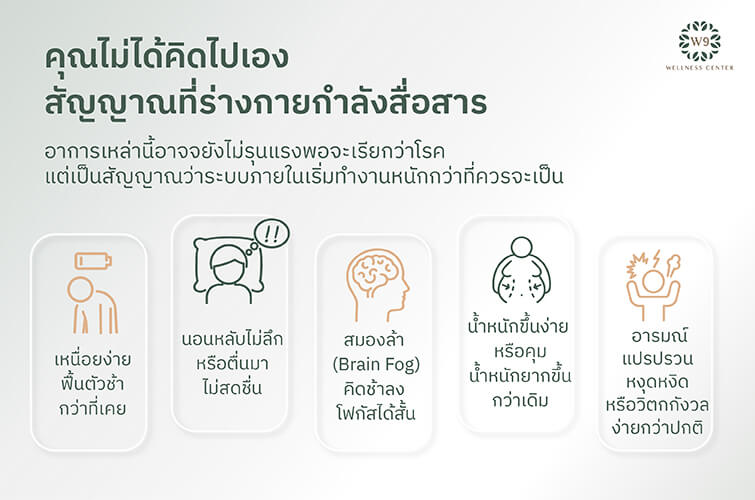
This is a question many people face, yet remain unanswered, because even if basic physical examination results are normal, making a diagnosis impossible, the question remains.
This becomes the starting point of our misunderstanding of our own bodies, yet we become aware of the abnormalities that are occurring.
These symptoms are often not directly caused by a single disease, but rather by imbalances in multiple body systems, such as the hormonal system, metabolism, or low-level inflammation that may not yet manifest as obvious abnormalities in typical health checkups. Therefore, a holistic view of your health can provide a better explanation for these symptoms.
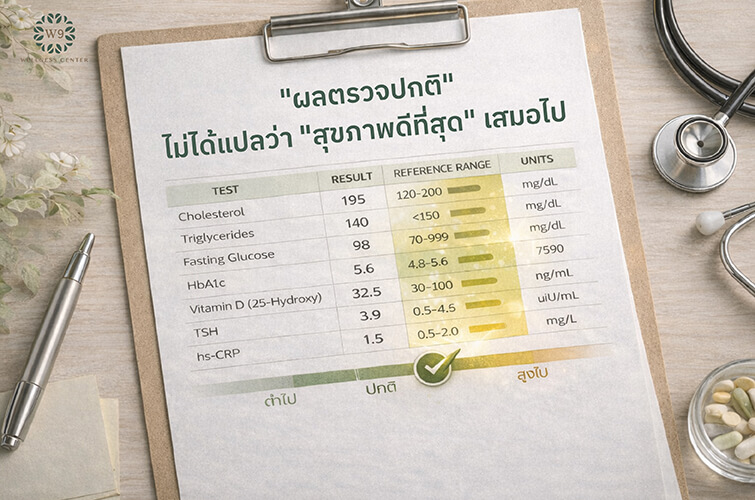
Generally, the word "Normal health check results." This refers to the cost of tests from routine health check-ups that are within the reference range for the general population, such as blood pressure, blood sugar, cholesterol, and liver and kidney function.
These normal values play an important role in screening for diseases with clear criteria, but they are not designed to assess whether... Are the body's systems functioning appropriately for each individual's lifestyle? The values within the acceptable range may not be the optimal for individuals with high workloads, chronic stress, or lifestyles that require more energy than average.
The period after receiving a health check result that says everything is normal should be a time of relief, but in reality, many people feel more confused. The lingering fatigue makes them question whether they are overthinking things or expecting too much from their bodies.
Common explanations like "lack of sleep" or "stress" aren't wrong, but they don't help explain why symptoms don't improve despite lifestyle changes.
At this point, many choose to push through because they can still work and live their lives, although they unknowingly need to expend more energy than before.
If you can still work but are recovering more slowly.
If you get enough sleep but don't feel refreshed.
If you're not sick, but don't feel as healthy as you used to be.
Read the article. I'm tired all day even though I got enough sleep. Click here

You may not have a disease, but your body is using more energy than it should to maintain daily balance. One system has to compensate for another, and when this constant effort continues, fatigue gradually becomes the new normal without us even noticing.
During this period, abnormalities often don't manifest as obvious findings in test results, but the body "compensates" by increasing its output, which is not a sustainable mechanism in the long term.
Annual health checkups are designed to screen for diseases with clear criteria, such as diabetes, high cholesterol, heart disease, or liver disease. However, the question this system answers better isn't just "Do I have a disease?" but rather, "How well is my body handling the burden of daily life?" Many chronic symptoms occur before the body meets the disease criteria, when the numbers are still within the reference range, and there are no clear warning signs.
In other words, general health checkups are good for detecting diseases, but they are not sufficient to describe quality of life and physical well-being.
Chronic fatigue is often the result of a combination of systems, such as:
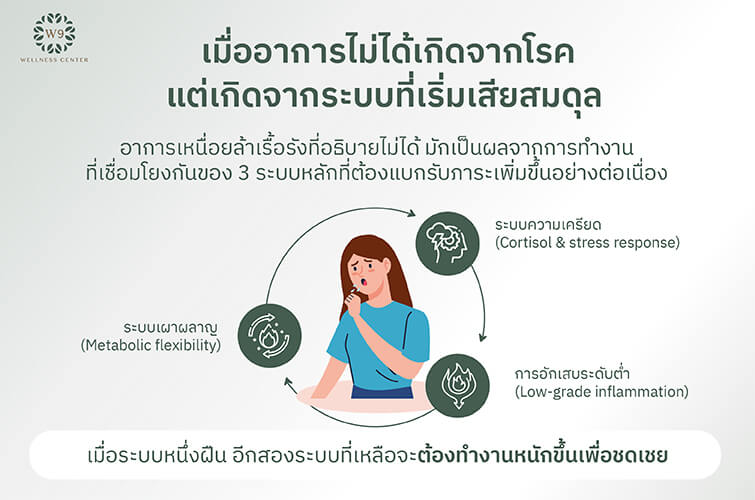
These systems are interconnected. If one system strains, others will have to bear the increased burden, and when this happens repeatedly, the body's flexibility will gradually decrease.
While most cases of chronic fatigue are related to systemic imbalances, you should consult a doctor immediately if you experience the following symptoms:
This article is intended for educational purposes only and is not a diagnosis.
When they don't understand the root cause, many people try to solve the problem themselves, such as:
If the root cause is an imbalance in one of the systems, treating it incorrectly may put more stress on the body.
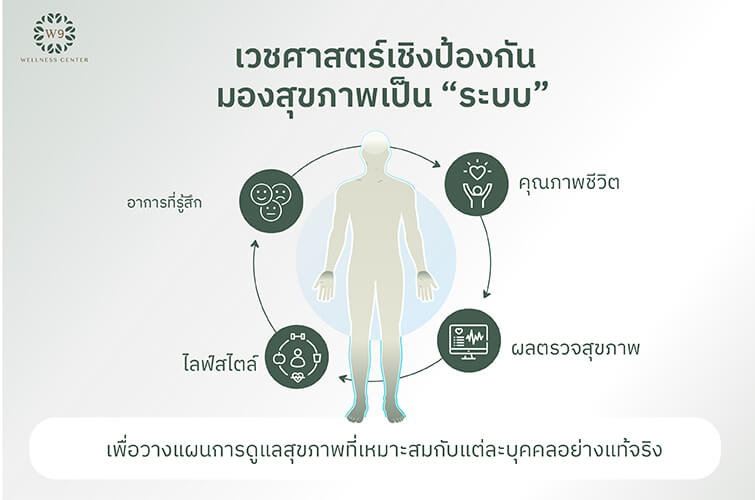
Based on the experience of our medical team caring for numerous working-age patients, chronic fatigue that shows no abnormalities on routine tests often stems from multiple systems working in coordination. Preventive medicine therefore emphasizes connecting symptoms, lifestyle, and health data to develop appropriate care plans, avoiding random testing and rushed decisions. This is a core principle that… W9 Wellness Used in personalized healthcare.
For many people, starting a comprehensive health care journey doesn't require getting everything checked at once. Instead, it might begin with a conversation with a doctor to assess systemic health, including daily symptoms, lifestyle, and existing health test results, in order to understand which systems are under excessive strain.
Starting from... Consult a doctor for a preventive health assessment. It helps to provide a more focused approach to healthcare, without the need to rush into defining "what" one is and without having to undergo specific disease testing right away.
My health checkup was normal, but I'm still tired. What could be causing this?
Chronic fatigue can result from imbalances in various body systems, such as hormones, metabolism, or low-level inflammation, which may not yet manifest as a clear disease or abnormality in a typical health checkup. A comprehensive body assessment can therefore help to better understand the symptoms.
Does a normal health check result mean you are truly healthy?
The term "normal" in a test result means values that fall within the reference range of the majority of the population, but are not necessarily the optimal values for everyone. Real-life health depends on individual contexts such as age, stress levels, and lifestyle.
When should you get a comprehensive health checkup?
A comprehensive health checkup may be suitable for those who have had routine checkups without finding any abnormalities, but still experience chronic symptoms such as fatigue, insomnia, or slow recovery. Discussing this with your doctor beforehand will help you better assess its suitability.
How does preventive medicine differ from general health checkups?
Preventive medicine aims to understand the overall balance of the body, not just to detect disease. It helps identify the connections between symptoms, test results, and lifestyle to provide personalized health care and ultimately help prevent chronic diseases that may develop in the future.
If I don't want to do more tests, can I start with something else?
Yes. In many cases, starting by talking to a doctor to understand your symptoms and lifestyle context can help identify appropriate healthcare approaches without necessarily needing to undergo further testing immediately.
Praram 9 Hospital (3rd floor, Building A)
Written and compiled by

Dr. Araya Damnernsawad (Dr. Am)
Anti-aging and preventative medicine physician
W9 Wellness Center
References