

SCIENTIFIC SLIM METABOLIC RESET
Can't lose weight even though you're taking care of yourself?
Can't lose weight even though you're controlling your diet and exercising? It might not be because you're not trying hard enough.
Many people don't lack discipline, but are facing underlying problems with their metabolism, hormones, and recovery process. Some eat less but their weight remains stagnant; some lose weight initially but then yo-yo it back; and some find themselves looking haggard, easily fatigued, frequently hungry, or craving sweets the more they try.
"I've tried everything...but I still can't lose weight." It might not always be a matter of discipline.
Some people eat clean during the weekdays but cheat heavily on weekends. Some succeed with intermittent fasting (IF) but their weight plateaus later. Some exercise harder and harder but their belly fat doesn't decrease. And some lose weight but lose muscle, making their bodies look less toned.
If you are one of these people, the problem may not be... "Not enough was done." But it might be that your body is responding to weight loss with more difficulty than usual.
Failure to lose weight may not be due to calorie intake alone. But we need to look at what factors are making it harder for the body to respond to fat loss.
What are some things that might make it harder for the body to lose weight?
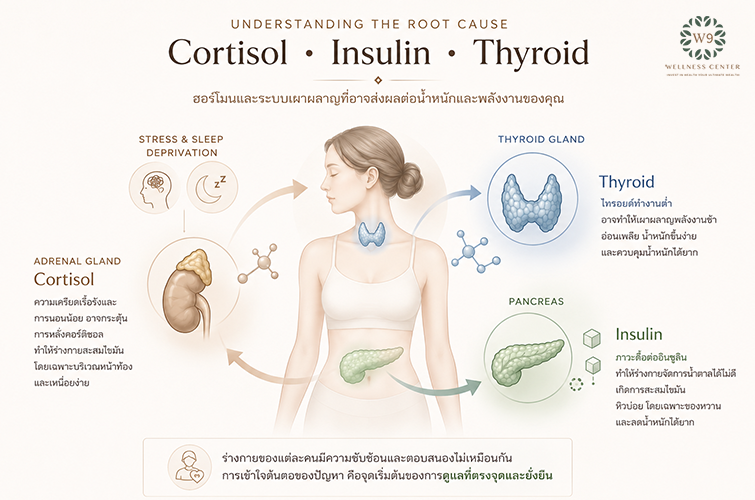
Failure to lose weight may not be solely about calories. In some people, metabolism, hormones, stress, sleep, or insulin resistance can all affect how the body responds to fat loss.
For example, accumulated stress can affect cortisol, poor sleep can impact recovery and hunger, while insulin resistance or hypothyroidism may be associated with reduced fat and energy storage in some people.
Not everyone needs to lose weight using the same method. And sometimes understanding "where your body is stuck" may be more important than simply trying harder.
Who usually fits this description?
- I've been on a diet for a long time, but my weight is stuck.
- I exercise regularly, but my fat doesn't decrease.
- You lose weight, but then you gain it back – the yo-yo effect.
- Weight loss, but muscle loss.
- I started intermittent fasting (IF) and it worked well at first, but it stopped being effective later on.
- After childbirth, weight or abdominal fat remains for a long time.
- Losing weight is harder after the age of 35.
- Stress, lack of sleep, or difficulty stopping eating.
Reasons why you might not be able to lose weight even when you're eating less.
From a medical wellness perspective, the inability to lose weight should be viewed from a broader angle. "Calories in – Calories out" Because each person's body may be stuck at different points. Some are stuck with stress, some with insulin, some with thyroid issues, and some with unknowingly experiencing decreased muscle mass.
Cortisol & Stress
When the body is under prolonged stress, the stress response system may overreact, leading to increased appetite, compensatory eating, poorer sleep, and in some individuals, increased abdominal fat. According to medical sources... Mayo Clinic and Cleveland Clinic Explain thatChronic stress and persistently high cortisol levels.This may be related to weight and eating habits.
Insulin Resistance
Insulin resistanceThis can alter blood sugar and energy management, and in some individuals, it's associated with belly fat, difficulty losing weight, drowsiness after meals, frequent hunger, or not eating much but not changing their body shape despite their efforts.
Thyroid & Metabolism
The thyroid plays a role in the body's energy utilization. If you have hypothyroidism or an imbalance in your thyroid gland, it may cause some people to gain weight, feel tired, have water retention, or find it difficult to control their weight. American Thyroid Association It's important to note that weight gain from thyroid issues often includes water and salt, not just fat.
Muscle Loss
If you lose weight but lose muscle mass. The body may burn less energy in the long run because muscle mass plays a significant role in metabolism. Some people may therefore feel tired easily, lose their firmness, or experience yo-yo dieting more easily, even after initial weight loss.
Signs that the problem might not just be about calories.
- Weight remains stable even when controlling diet.
- Feeling sleepy after a meal.
- I crave sweets easily.
- Belly fat is hard to lose.
- I don't feel refreshed after sleeping.
- Easily tired during the day.
- I recover slowly after exercising.
- Losing weight makes you look haggard.
Why may some weight loss programs only provide temporary results?
Some approaches may help with weight loss in the initial stages, especially when combined with strict diet or exercise. However, this is not always the case for people who have been stuck with their weight for a long time. Just looking at the weight on the scale might not be enough. Because the body may be stuck in certain internal systems that have not yet been evaluated.
When the focus is primarily on "weight".
Many people start by eating less, exercising more, or following a formula that works for others, but each person's body may not have the same problems.
- Weight loss But I don't know if it's fat or water that's been lost.
- Muscle loss leads to a lower metabolism in the long term.
- Stress, sleep, or insulin levels may not yet be assessed.
- Once the original plan is complete, the weight may come back easily.
SCIENTIFIC SLIM METABOLIC RESET
This approach begins with assessing "where the body is stuck" before designing personalized care, using health information along with the client's actual goals and behaviors.
- View Body Composition in conjunction with other health information.
- Your doctor may consider hormones, metabolism, insulin, and other factors as appropriate.
- Designed based on each individual's history, goals, and assessments.
- Create an ongoing plan tailored to your long-term health and lifestyle.
Not everyone needs to lose weight using the same method. Understanding the different root causes can help reduce trial and error and make care more directed.
Hospital-Based Weight Management starts with safety and factual information.
SCIENTIFIC SLIM METABOLIC RESET This is a weight management approach within the Medical Wellness framework that emphasizes assessing the root cause, not a one-size-fits-all weight loss formula. The key is using medical data such as blood test results, hormone levels, metabolism, and body composition to help doctors determine where the body should begin its weight management.
This approach is suitable for those who have struggled to lose weight, have experienced yo-yo dieting, or feel their bodies are not responding despite diet and exercise. The examinations and care may vary depending on each individual's history, symptoms, and the doctor's discretion.
How does SCIENTIFIC SLIM METABOLIC RESET differ from typical weight loss methods?
After understanding the possible causes. SCIENTIFIC SLIM METABOLIC RESET W9 Wellness doesn't start with the question, "How many kilograms do I want to lose?" but with "Where does your body stand?" This ensures that care isn't guesswork, but rather an assessment based on real data and tailored to each individual.
Not everyone needs the same tests, and not everyone should lose weight using the same method. Because some people are addicted to stress, some to insulin, some to sleep, some to muscle mass, or a combination of factors.
- Analyze the source based on the actual test results.
- Assess hormones and metabolism.
- watch Body composition analysis using BIA.
- Design a personalized plan.
- Follow up regularly every 4–6 weeks.
- emphasize Reduce fat without unnecessarily losing muscle mass.
In-depth assessment: What does it check if you haven't been able to lose weight for a long time?
In some cases, your doctor may consider additional tests. Symptoms, medical history, and individual health goals. To see which systems might be involved in weight loss problems, such as hormones, insulin, stress, nutrition, gut, or muscle mass.
1. Thyroid Stimulating Hormone (TSH)
estimate Thyroid function This is related to energy, metabolism, and fatigue in some individuals.
2. Vitamin D3 Total (25-OH)
Monitor vitamin D levels, which play a role in metabolic health, immunity, muscle function, and overall energy.
3. Insulin-like Growth Factor-1 (IGF-1)
It helps reflect the body's recovery system, muscle mass, and repair processes, which are related to weight loss without looking gaunt.
4. Serum Cortisol
estimate stress hormones This may be related to sleep, appetite, and midsectional fat in some individuals.
5. Dehydroepiandrosterone (DHEAs)
Examine the balance of hormones related to stress, energy, and overall physical recovery.
6. Insulin Level
estimate Insulin responseAnd managing blood sugar may be related to fat accumulation and difficulty losing weight.
7. Urine Indican Test
Assess indicators related to gut balance, which may play a role in absorption, inflammation, and metabolic health in some individuals.
8. Body Composition (BIA)
See where the weight change came from. Fat, water, or muscle mass. To help reduce the risk of yo-yo dieting (losing weight haphazardly or experiencing the yo-yo effect).
9. Personalized Nutrition & IV Support
In some cases, based on an assessment, a doctor may consider prescribing personalized nutritional supplements or vitamins to support energy and recovery.
10. Medical Weight Management Tools
In some cases, doctors may consider appropriate medical devices, along with lifestyle modifications, sleep and nutrition adjustments, and ongoing monitoring.
The tests and care guidelines don't have to be the same for everyone. Your doctor will consider your individual history, symptoms, risk factors, and health goals.
Case examples of people who were unable to lose weight, even after taking care of themselves.
Many clients start by controlling their diet, exercising, or trying...I've tried many ways to lose weight. However, further in-depth assessments revealed that the problem may be related to hormones, metabolism, stress, or individual differences in body composition.
Each client has different physical responses. Some are related to stress, others to hormones, sleep, or metabolism, so different assessment and care approaches may be required for each individual.
Care provided by a team of physicians specializing in Preventive & Anti-Aging Medicine.
The Medical Wellness approach may require...Evaluate multiple systems together. This includes hormones, metabolism, nutrition, and behavior, in order to design a personalized approach for each individual's body.
Dr. Pijak Wongvisit
Preventive Medicine, Hormone Balance, Weight Management, Functional Medicine, Lifestyle Medicine

Dr. Chalermpon Innachit
Lifestyle Medicine, Hormone Optimization, Precision Nutrition, Weight Management

Dr. Krit Thitirangsi
Preventive Medicine, Precision Nutrition, Integrative Medicine, Hormonal Adjustment
Frequently asked questions about "unable to lose weight".
Q: Why do I eat less but don't lose weight?
A: It could be due to the body using less energy, lack of sleep, stress, decreased muscle mass, or contributing factors related to insulin and metabolism.
Q: Why does my weight plateau when I do Intermittent Fasting (IF)?
A: Some people may actually eat less, but their bodies might adapt, use less energy, or unconsciously compensate by eating less at other times of the day.
Q: Do hormones really affect weight?
A: Some factors, such as insulin, thyroid, and stress hormones, are involved, but this should be assessed in conjunction with diet, sleep, exercise, and overall behavior.
Q: How can I lose weight in a way that reduces the chance of the yo-yo effect?
A: The focus should be on a realistic plan that's achievable, preserving muscle mass, getting enough sleep, managing stress, and continuously monitoring progress, rather than solely focusing on rapid weight loss.
Not everyone needs to lose weight in the same way.
- Some people get stuck on stress and sleep.
- Some people become dependent on insulin or sugar management.
- Some people have thyroid or metabolic issues.
- Some people lose weight but lose muscle mass, making it easy to regain it all (yo-yo effect).
Starting with an assessment can help you avoid trial and error and understand where your body needs to begin.
Summary of key points
- SCIENTIFIC SLIM METABOLIC RESET focuses on assessing the root cause of weight loss difficulties, not on using the same formula for everyone.
- Failure to lose weight may be related to hormones, insulin, metabolism, stress, sleep, or in some cases, gut health.
- People who are doing everything right but still not succeeding may be in the category of a Wellness Hard Case.
- Medical Wellness focuses on in-depth examinations and personalized designs.
- Monitoring body composition is more important than just looking at weight.
- The long-term goal is to achieve sustainable fat loss without unnecessarily compromising health or muscle mass.
If you haven't been able to lose weight for a long time, despite trying...
Perhaps you don't need to try harder, but rather start by making the right assessment.
Schedule an initial assessment with the W9 Wellness medical team to see where your body should begin.
Personalized weight loss program options.
Can't lose weight... even though I've "tried" already.
Perhaps the problem isn't with "discipline," but rather that the body hasn't been properly assessed.
- I'm on a diet, but my weight is staying the same.
- I exercise, but my fat isn't decreasing as much as it should.
- You might lose weight initially, but then you'll yo-yo back.
- I want to lose fat without losing muscle mass.
Rama 9 Hospital, 3rd floor, Building A
- Phone number: 092-9936922
- Line: @w9wellness
A favorite vitamin formula for many people. Helps increase fat burning and improve weight loss efficiency.
price ฿5,000.00 baht
Vitamin formula for controlling weight, burning and inhibiting fat accumulation, especially abdominal fat. Want to lose weight continuously and be healthy without having to fast or exercise hard.
- Vitamin set 5 capsules (1 pack has 30 sachets)
- Take 1 sachet daily.
price ฿2,800.00 baht