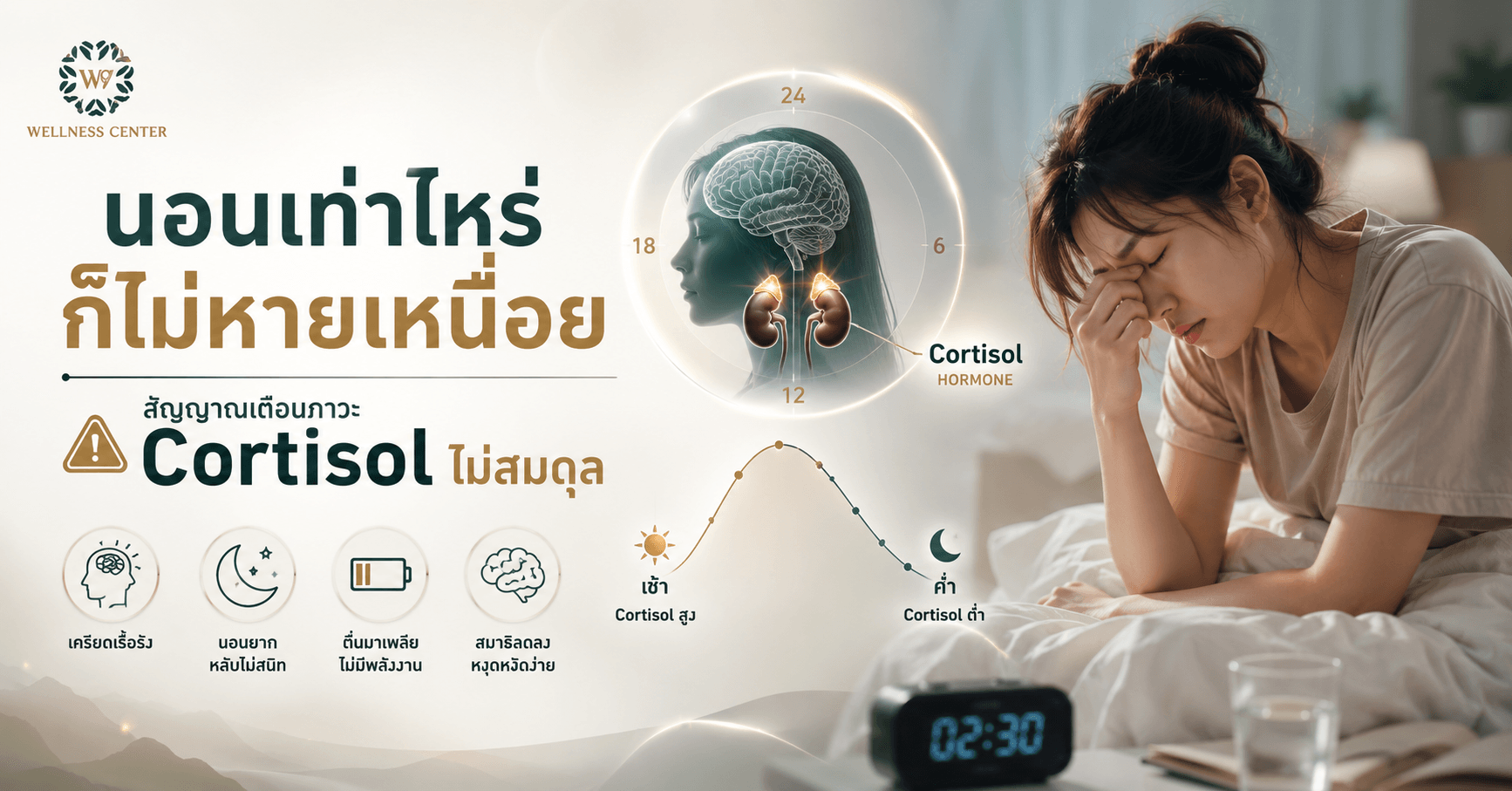
Have you ever tried going to bed earlier, getting 8-9 hours of sleep, or even spending your whole day off sleeping in bed, only to wake up feeling sluggish and exhausted? Many people mistakenly attribute this to "accumulated fatigue" from hard work or simply think they haven't had enough rest.
But if adjusting your sleep schedule doesn't alleviate drowsiness and lack of energy, the question might not just be, "Am I getting enough sleep?" but rather, "Is my body's internal system sending some kind of warning signal?"
Cortisol Cortisol is an important hormone produced by the adrenal glands. It plays a role in responding to stress and regulating energy levels, metabolism, and the body's natural circadian rhythm. Cortisol levels have a clear daily cycle:
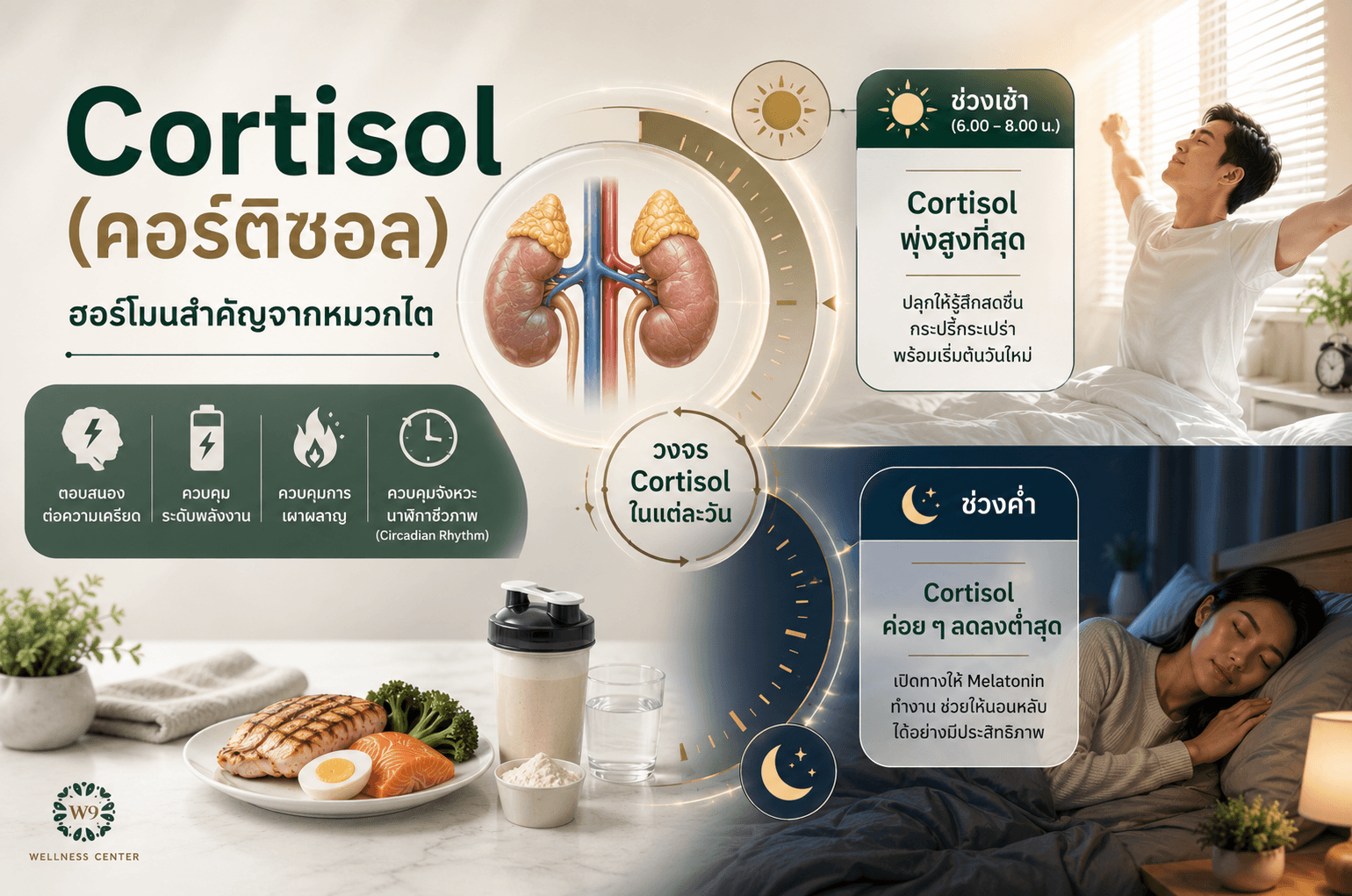
Morning session (6:00 – 8:00 AM): Cortisol levels peak at the time, waking us up and making us feel refreshed and energetic, ready to start the day.
Evening: Cortisol levels gradually drop to a minimum, making way for the sleep hormone melatonin to work effectively.
When this system is functioning normally, we wake up feeling refreshed and go to sleep smoothly.
If daily life involves chronic stress, irregular sleep patterns, or accumulated sleep deprivation, the adrenal glands can be overstimulated, leading to an imbalance of cortisol hormones (also known as cortisol hormone). Adrenal Fatigue) which usually manifests in two main forms:
Abnormally low cortisol levels in the morning: I woke up feeling extremely tired and drained of energy. It was difficult to get out of bed, even after sleeping for several hours.
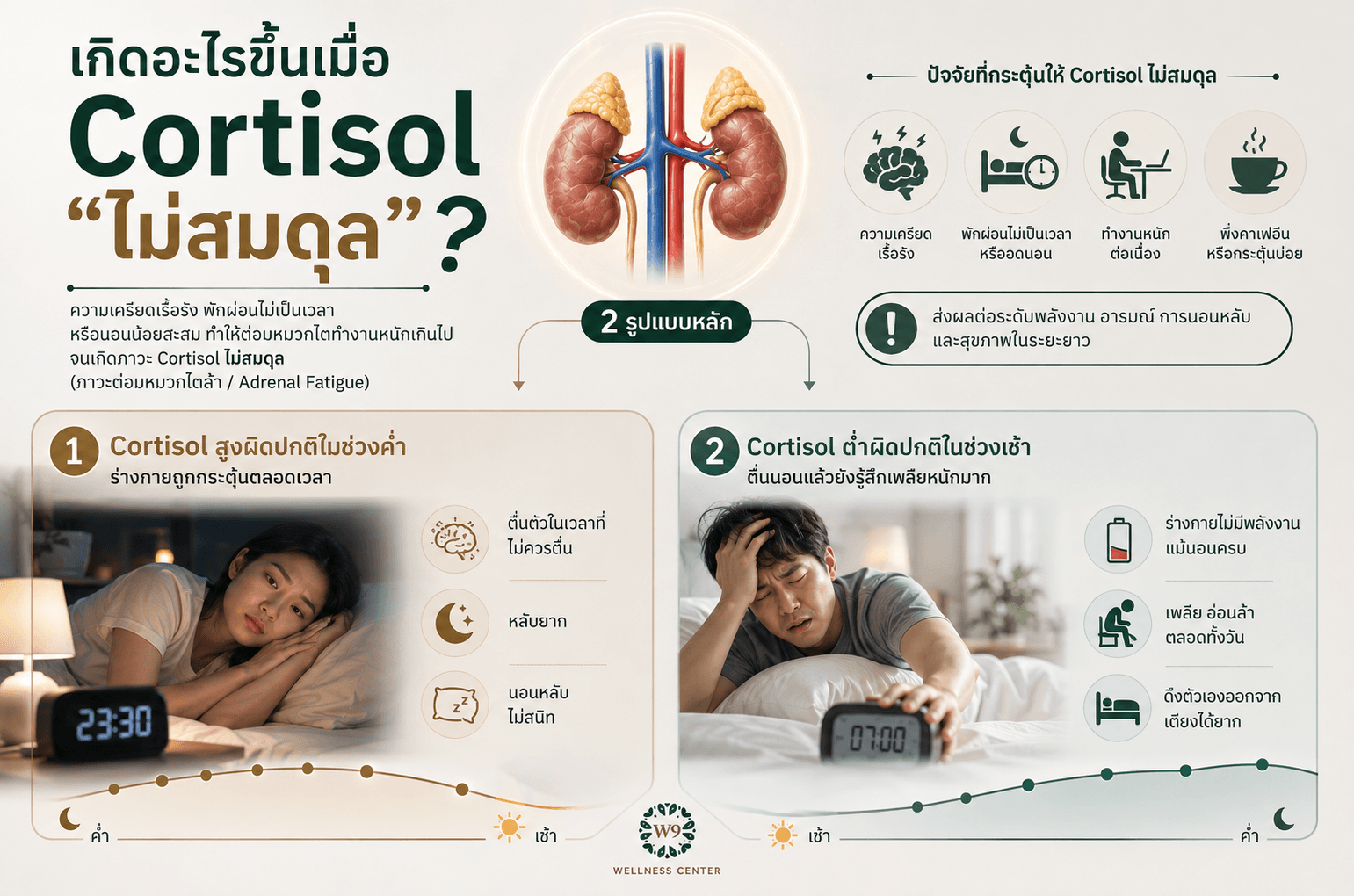
These symptoms don't necessarily mean you have a serious illness right away, but they are signs that... The body's natural recovery mechanism is malfunctioning.
Checklist: Warning signs you may have a cortisol imbalance.
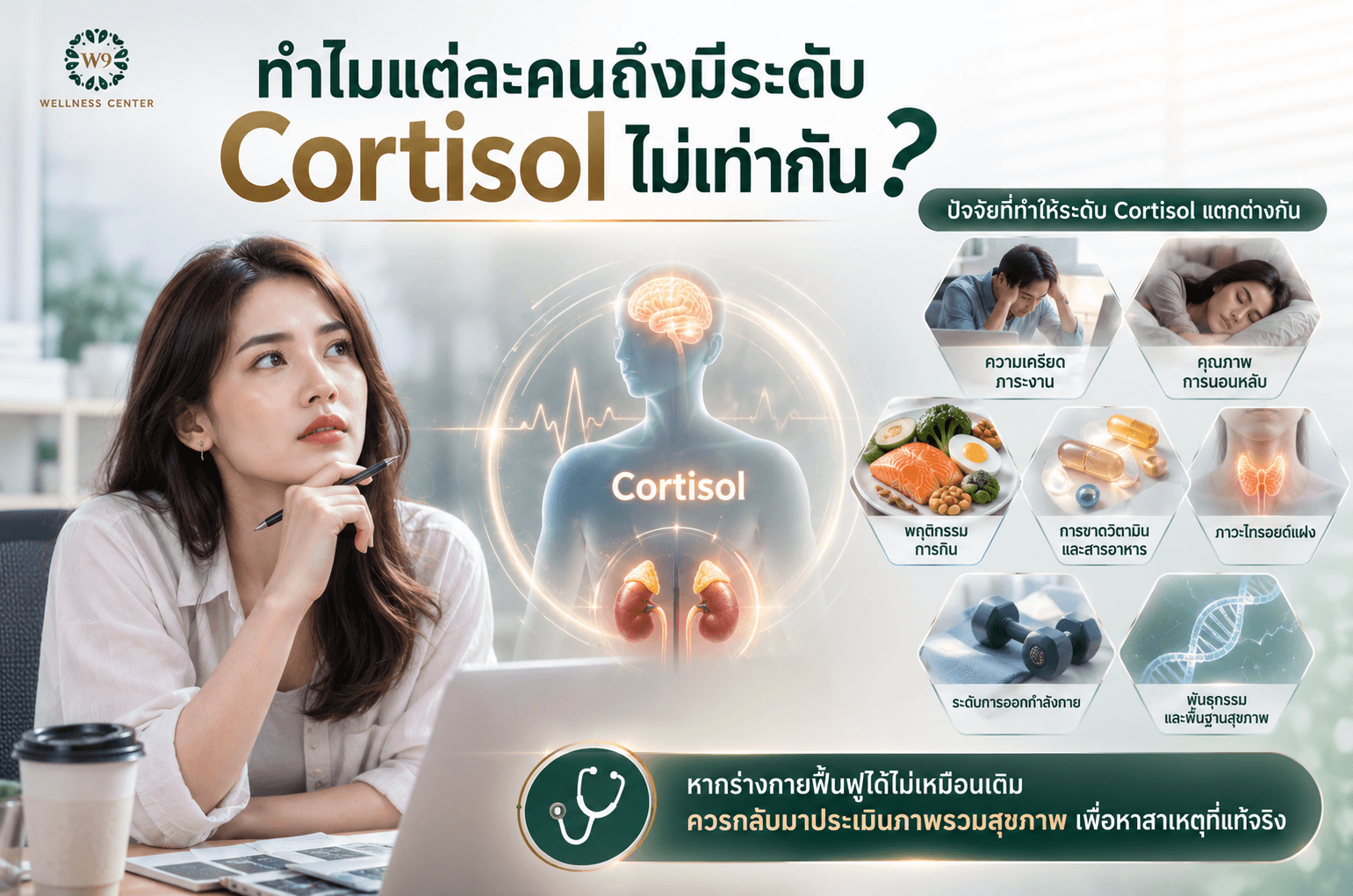
Because fatigue and hormone levels aren't dependent on a single factor, each person's body responds differently to stress. Some may have contributing factors such as workload, eating habits, vitamin deficiencies, or underlying thyroid conditions.
Therefore, if you feel your body isn't recovering as well as before, the important thing isn't to rush out and buy vitamins or stress-reducing supplements, but rather to... Let's reassess the overall health situation. To find the true cause.
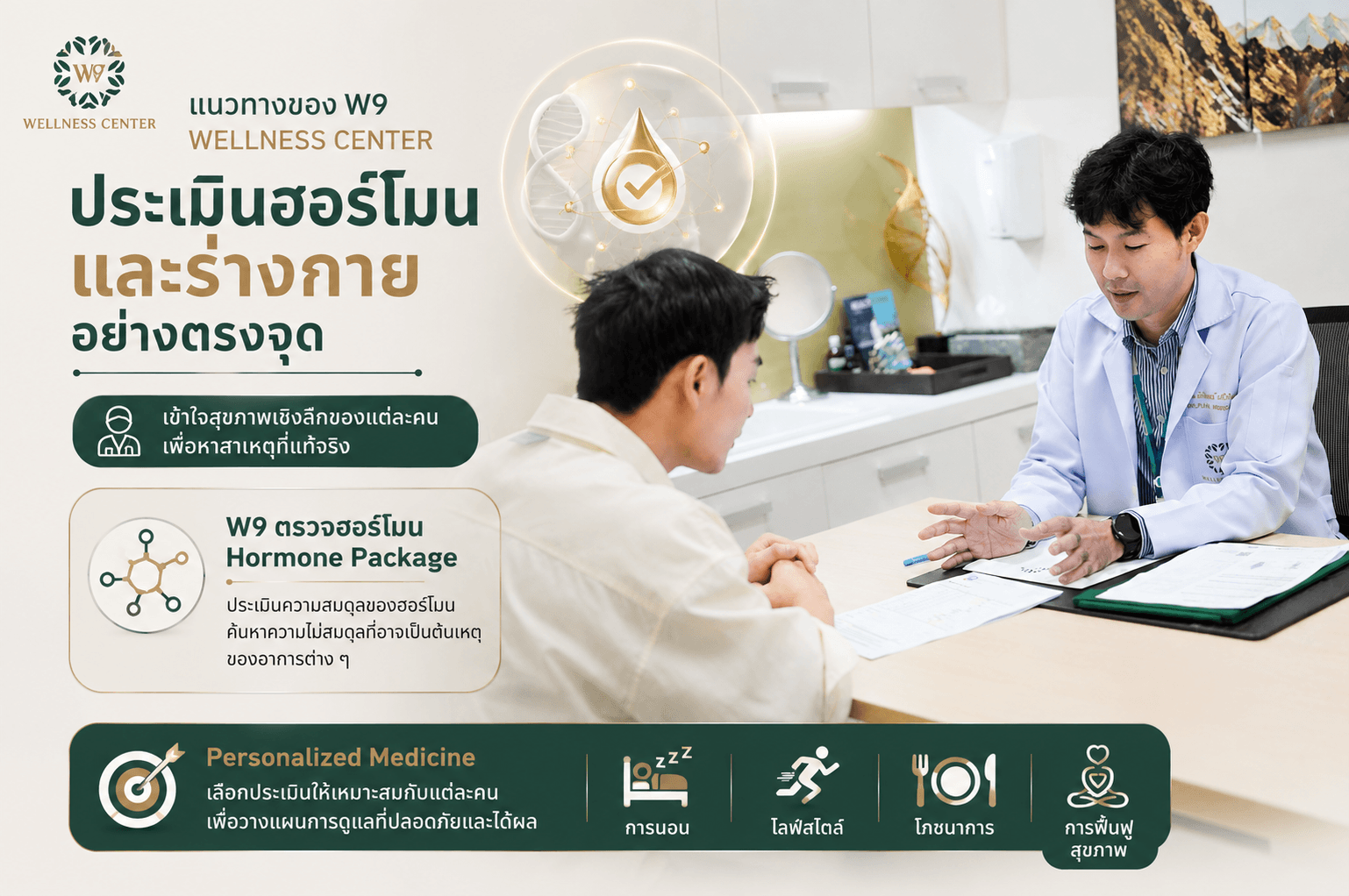
at W9 Wellness Center We believe that the feeling of "not feeling refreshed no matter how much you sleep" has unique origins for each individual. Effective care, therefore, doesn't start with prescribing medication, but with understanding each person's health, lifestyle, and in-depth symptoms.
If indicated, your doctor may recommend laboratory evaluations to check cortisol levels and other related factors:
For W9, the approach is as follows: Personalized Medicine This doesn't mean checking everything unnecessarily, but rather... "Choose an assessment that is appropriate for each individual." The information obtained will be used to plan lifestyle adjustments, sleep patterns, and health recovery in a rational and safe manner.
Q: How can I tell if my fatigue is due to a cortisol imbalance and not just lack of sleep?
A: If you've adjusted your habits, such as going to bed earlier and getting 7-8 hours of sleep consistently for more than 1-2 weeks, but your fatigue, drowsiness, or difficulty waking up persists, you should consider getting your hormone levels and other health factors evaluated.
Q: My annual health checkup results were normal, but why do I still feel tired all the time?
A: Typical annual health checkups focus on screening for serious diseases or abnormalities in major organs, but may not cover levels of stress hormones, vitamins, or functional balance—important factors affecting daily energy levels.
Q: If there is a cortisol imbalance, can it be treated?
A: It is possible to restore balance by starting with an assessment of the root cause in collaboration with a doctor. This will allow for a plan to adjust nutrition, sleep patterns, stress management, and possibly provide appropriate supplementation of essential nutrients tailored to each individual.
This information is provided for general medical knowledge and cannot replace a diagnosis or advice from a specialist. If you experience chronic fatigue, persistent tiredness, or symptoms that affect your daily life, you should consult a doctor for proper evaluation.
W9 Wellness Center has two branches.
📍Rama 9 Branch (Ital-Thai House Building)
Call 062-424-2298
📍Chaengwattana Branch (Charn Avenue Project)
Call 062-424-9429
Line @w9bkkwellness
Written and compiled by

Anti-aging and preventative medicine physician
W9 Wellness Center