PMOS

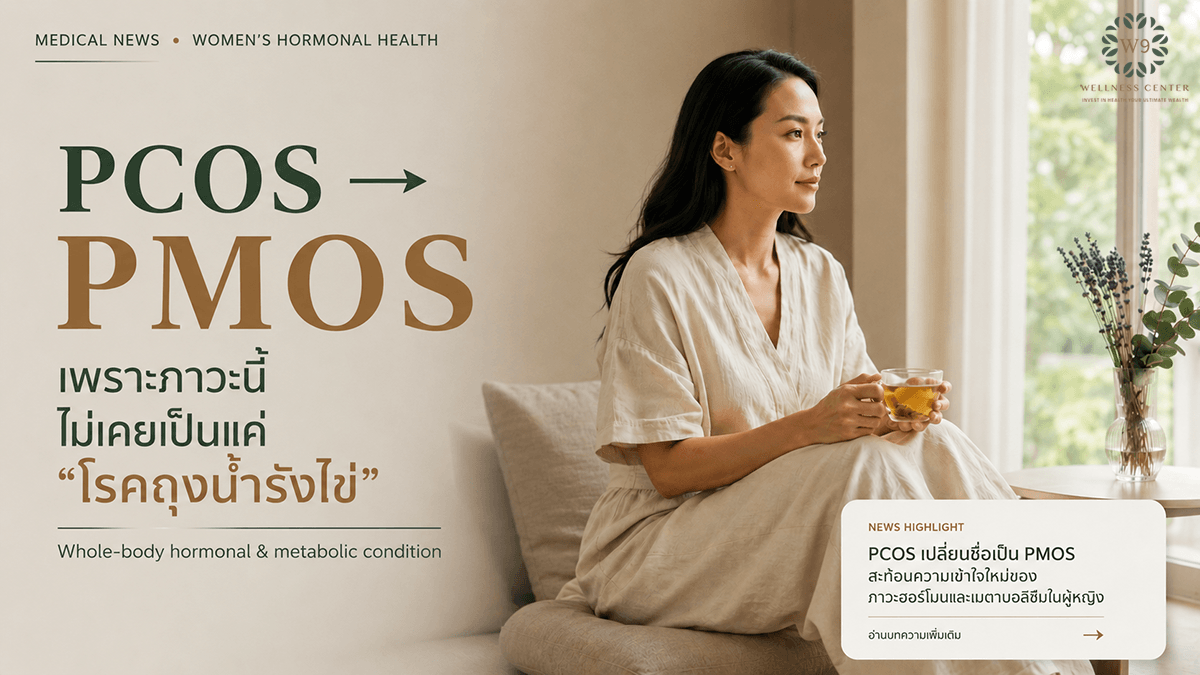
PCOS has been renamed PMOS because this disease was never just "ovarian cysts."

Over the years, many women who have...PCOS It is often misunderstood as simply a "female hormonal problem" or "ovarian disease."

But in reality, many patients face symptoms that affect their entire bodies, including easy weight gain, chronic fatigue, acne, hair loss, insomnia, insulin resistance, and even an increased risk of heart disease and metabolic disorders.

The Endocrine Society recently announced a new name for... PCOS is called PMOS (Polyendocrine Metabolic Ovarian Syndrome) To reflect the complexity of this condition.

This change is not just a "rename of the disease," but reflects a new understanding in the medical field that this condition is a "whole-body condition," or a disorder involving multiple body systems, rather than previously understood.

What is PMOS? And how does it differ from the original PCOS?

The original name, "Polycystic Ovary Syndrome," led many to believe that the disease primarily involved "ovarian cysts," when in reality, many patients did not actually have ovarian cysts.

New name Polyendocrine Metabolic Ovarian Syndrome (PMOS) It was therefore proposed to reflect the fact that this disease is related to...

  • The hormonal system (Endocrine System)
  • Metabolism
  • Insulin resistance
  • chronic inflammation
  • Cardiovascular health
  • Mental health and long-term quality of life.

This name change comes after more than 14 years of study, research, and collaborative advocacy from patients, healthcare professionals, and women's health organizations worldwide. More than 22,000 people participated in a survey, and over 861 TP3T (Patient-to-Child Relationship) participants supported the name change.

Read articles about... PCOS (Polycystic Ovary Syndrome)

Many people think of PCOS as simply "polycystic ovary syndrome," but it can actually be more complex than that.

The condition now being referred to as PMOS doesn't just affect the reproductive system, but involves many systems in the body, such as:

  • Insulin Resistance
    Reduced insulin response leads to easy weight gain, frequent hunger, fatigue, and an increased risk of diabetes.
  • Chronic Inflammation (low-level chronic inflammation)
    Ongoing inflammation in the body may be associated with fatigue, acne, skin inflammation, and long-term chronic diseases.
  • Hormonal Imbalance
    Sex hormones, insulin, and stress hormones can all be out of balance, affecting menstrual cycles, mood, and metabolism.
  • Metabolic Dysfunction
    An inefficient body metabolism makes weight control difficult and increases the risk of fat accumulation.
  • Cardiovascular Risk
    Individuals with PMOS may have an increased risk of dyslipidemia, hypertension, and heart disease.
  • Sleep Disorders / Sleep Apnea (Sleep Apnea and Sleep Disorders)
    Shallow sleep, waking up feeling unrested, or experiencing sleep apnea can affect hormones and energy levels in daily life.
  • Acne & Skin Changes
    Chronic acne, oily skin, or skin tags may be signs of hormonal and insulin imbalance.
  • Excess Hair Growth & Hair Loss
    This is caused by higher-than-normal levels of androgen, or male hormones, in some individuals.
  • Fertility Challenges (Infertility or Irregular Ovulation)
    Irregular menstrual cycles and irregular ovulation can affect pregnancy.
  • Mental Health Impact
    Stress, anxiety, self-esteem, and chronic fatigue can all negatively impact long-term quality of life.

Why are so many women diagnosed late?

One of the major problems with PCOS/PMOS is that its symptoms are varied and may develop gradually.

Many women may only have...

  • It's easy to gain weight.
  • My menstrual cycle is irregular.
  • chronic acne
  • Easily tired
  • Not getting enough sleep
  • Difficult to lose weight

This sometimes leads to the symptoms being perceived as simply a matter of "lifestyle" or "stress."

In some cases, basic health test results may still appear normal, even though there are underlying abnormalities in hormones, insulin, or metabolism.

This is a key reason why the "whole-body approach" to disease is gaining more attention in modern medicine.

PMOS isn't just about "ovaries"; it may be related to long-term health.

Current research suggests that individuals with PMOS may have an increased risk of...

  • Type 2 diabetes
  • Fatty liver
  • Dyslipidemia
  • cardiovascular disease
  • Sleep apnea
  • Infertility
  • Stress and anxiety.

This has led to a shift in patient care from "treating symptoms" to assessing the root causes of abnormalities in multiple systems simultaneously.

From a preventive medicine perspective, why in-depth assessment is important.

From the perspective of preventive medicine, PMOS may not just be an ovarian problem, but a general hormonal and metabolic imbalance throughout the body.

In some cases, your doctor may consider further evaluation, such as:

  • In-depth hormone balance test
  • Assessment of insulin resistance.
  • Lipid and metabolism testing
  • Assessing chronic inflammation.
  • Analysis of sleep quality and stress.
  • Personalized nutritional and lifestyle care.

To help to better understand the “root cause” or underlying reason for each individual's disorder.

This name change is more important than you think.

For many women, the transition from "PCOS" to "PMOS" is more than just medical terminology.

But it is an acknowledgment that...

  • Their symptoms are real.
  • This disease is more complex than previously explained.
  • Women's health should be viewed from a more comprehensive perspective.
  • And the care should encompass hormones, metabolism, mental health, and long-term quality of life.

Summary of key points

  • PMOS is the new name for the condition previously known as PCOS.
  • The new name reflects the fact that the disease involves both the hormonal and metabolic systems.
  • Many patients experience symptoms that affect the entire body, not just the ovaries.
  • Delayed diagnosis remains a major problem worldwide.
  • Preventive medicine approaches are increasingly focusing on in-depth health assessments and root causes.

If you have chronic symptoms such as difficulty losing weight, irregular periods, fatigue, chronic acne, or insulin resistance, even if your baseline test results are normal, you should seek medical attention. A comprehensive health assessment can help you gain a better understanding of your own body.

Praram 9 Hospital (3rd floor, Building A)

  • Phone number: 092-9936922
  • Line: @w9wellness
  • Opening-closing hours: 08.00 – 17.00 hrs.

Written and compiled by

Dr. Chalermpon Innachit (Dr. Nong)

Anti-aging and preventative medicine physician
W9 Wellness Center

This information is provided for general medical knowledge only and cannot replace a diagnosis or advice from a specialist physician.

References

Share : 

Related articles

Gaining weight for no reason Unintentionally losing weight Her body has changed to the point that people have to come say hello! It may not be a good thing for some people. Because that may mean a glandular disorder.

“Sleep deprivation” has a theory of aging. One theory states that people age because their hormones fall.

Are you one of those people who want to quit smoking but can't? You know that smoking is harmful to your health, but getting over the habit and craving for nicotine is not easy. However,