Many people have tried to lose weight multiple times, counting calories, exercising, joining weight loss programs, or experimenting with various popular methods. Initially, they might see real weight loss, but over time, they may find it harder to lose weight, or even regain their original weight or gain more, despite feeling that they are no longer able to lose weight. "Eat the same amount."
The question that many people are beginning to wonder is: "Why is it harder to control weight as we age, even if our lifestyle doesn't change much?"
In working-age women, especially those around 35–45 years old, changes in hormones, body composition, sleep quality, stress, and metabolism may play a more significant role than many realize.
Therefore, weight loss may not be simply a matter of "discipline" or "eating less." But it also involves understanding what signals each person's health is sending.
This article is a case study of a working woman who didn't want a drastic change, but rather a desire to regain the feeling that "her body still belongs to her."
| list | information |
| Gender / Age | A 38-year-old woman. |
| height | 163 centimeters |
| Lifestyle | I have a regular job, I enjoy eating out, I like cafes and restaurants, and I still want to live a normal social life. |
| The goal of care. | Want to lose weight without dieting or giving up all your favorite foods? |
| Concerning issues | I gain weight easily, get tired easily, feel bloated, feel hungry frequently throughout the day, and have tried to lose weight several times but have been unable to maintain the results in the long term. |
| Results after treatment | Weight loss from 63.1 left 56.4 kilograms Percentage of body fat decreased from... 33.8% left 28.7% While maintaining and increasing muscle mass. 21.9 Come up to 22.4 kilograms Within a period of 9 months. |
When it comes to weight loss, many people think of giving up sweets, stopping late-night meals, or exercising intensely every day. But for her, what makes her hesitant to start losing weight isn't because she doesn't see the importance of her health, but because she feels that... "If I had to give up everything I like, I probably couldn't do it."
Her days off involved exploring new restaurants, hanging out in cafes with friends, or having meals with family. For her, eating wasn't just about getting energy; it was a part of her happiness, relationships, and quality of life. However, at some point in her life, she began to notice changes in her body.
Even though I'm eating similar amounts of food, I gain weight more easily than before. Clothes that used to fit her were starting to feel tight, she felt tired more easily, and some days she woke up still not feeling refreshed. What started to worry her wasn't just her appearance, but the feeling that "her body wasn't responding like it used to."

Many people who gain weight are often told, "Eat less" or "Exercise more." While these pieces of advice are important, medically speaking, many other factors can affect weight management, especially in working women. Hormonal changes, body composition, sleep quality, stress, and lifestyle can all impact metabolism.
For this woman, the purpose of seeing a doctor wasn't to immediately request weight-loss medication, but rather to find out "what signals her body is sending" and "what factors are making weight loss difficult."
These questions are the starting point for...In-depth health assessment Instead of starting with strict dietary restrictions...
When she described her symptoms, she said that she gained weight easily despite eating similar amounts, felt tired easily, experienced water retention, and found it more difficult to lose weight than before. The doctor didn't immediately conclude that it was caused by diet or a lack of discipline.
Conversely, The first thing a doctor does is find out if there's any underlying physical abnormality that might be causing the symptoms. Because weight gain can be caused by many factors, such as: Hormonal imbalance, vitamin D deficiency, metabolic disorders, or an imbalance of gut microbiota. Therefore, a systematic assessment is necessary before planning care.
Therefore, a systematic health assessment is conducted, including body composition analysis and blood tests, to help...Doctors see the bigger picture of health, not just the numbers on a scale.

When blood test results were evaluated along with other information, the doctor found no abnormalities in thyroid function, insulin levels, or stress hormones that could directly explain the weight gain. These results helped the doctor rule out certain conditions that might be causing the weight gain, such as thyroid dysfunction or common metabolic disorders. However, Just because a test result is within the normal range doesn't always mean there are no changes in the body.
Although baseline blood tests for this patient did not reveal any abnormalities that could directly explain the weight gain, the doctor, after evaluating the symptoms, body composition, and lifestyle, found several factors that might be related to weight management, including: Estrogen Dominance (Imbalance in female hormones) together with Gut Dysbiosis (Imbalance of gut microorganisms) This may affect metabolism, appetite, and fat accumulation in some people.
Based on all the information, the doctor didn't focus solely on calorie restriction or prescribing weight-loss medication, but rather on creating a personalized care plan. This approach aimed to restore the body's balance through nutrition, lifestyle changes, and continuous monitoring of body composition.
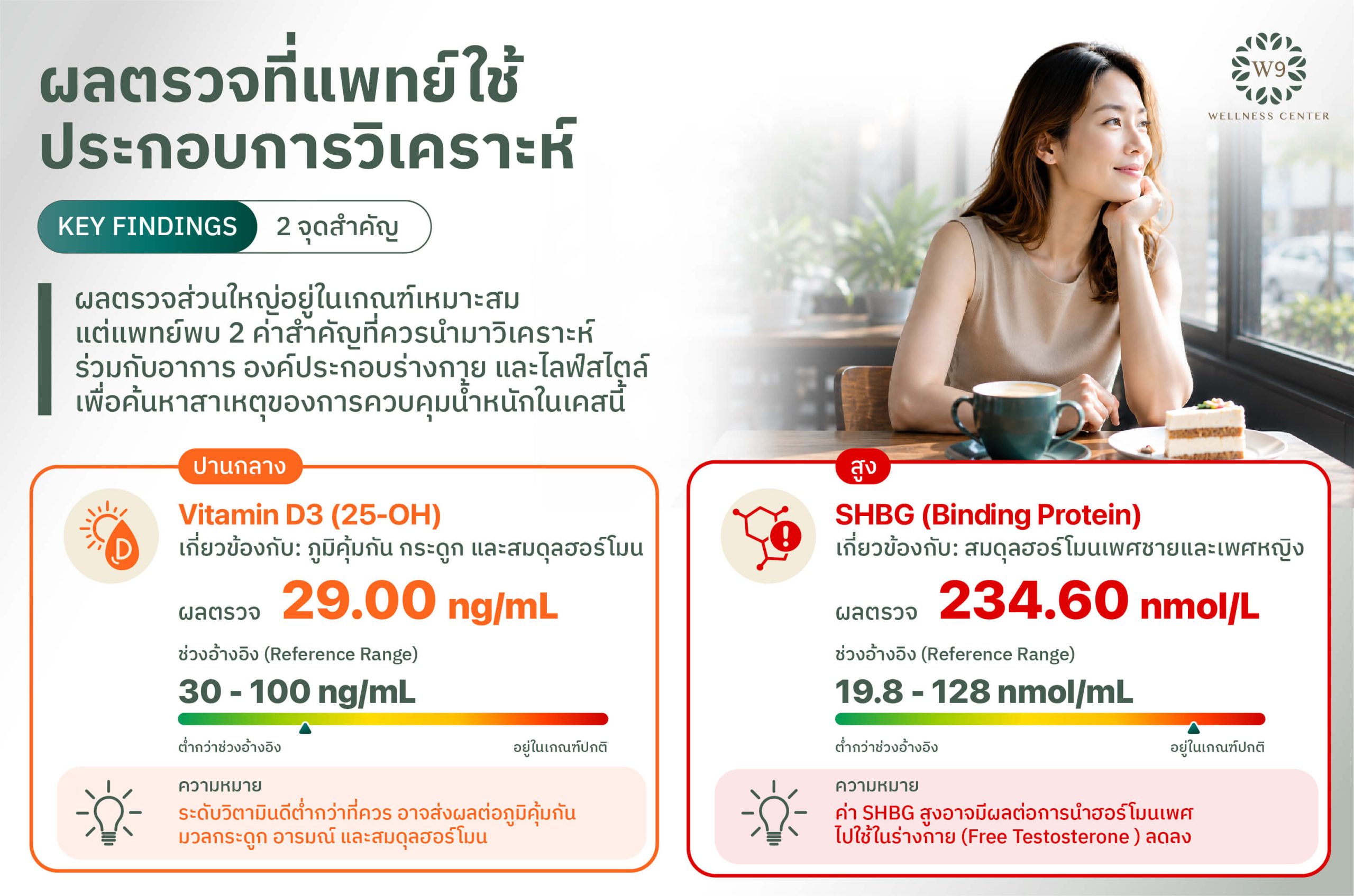
However, there are also symptoms that affect quality of life, such as easy weight gain, fatigue, water retention, and a feeling that the body is not as responsive as before. The doctors then evaluated all the information together. This includes examining test results, body composition, symptoms, sleep quality, stress levels, and lifestyle patterns to gain a comprehensive understanding of each individual's health and plan appropriate care for them.
Read more: program Scientific Slim Metabolic Reset What factors are assessed, and why might in-depth testing help identify factors related to weight management in some individuals who are unable to lose weight?
When it comes to weight loss, many people focus primarily on the number on the scale, but in preventive medicine...The goal of care is not simply to lose weight. What doctors consider equally important is...
For this person. The results are not simply reflected in the declining numbers. But it reflects changes in body composition that occur gradually, because body composition analysis shows that weight loss occurred from... 63.1 kilograms reduced to 56.4 kilograms. Along with a decrease in body fat percentage. 33.8% reduced to 28.7% While muscle mass was preserved and even increased during treatment, this weight loss was primarily due to a reduction in fat mass, not muscle loss.
Follow-up considers not only body weight but also assesses body composition and response to the care plan.
| period | The changes that have occurred. |
| Begin the care. | weight 63.1 kg Body Fat 33.8% She feels easily tired, gains weight easily, and is worried that her body isn't responding the same way as before. |
| First month | They start responding to care, hunger between meals decreases, eating habits can be adjusted more easily, and weight changes begin to be visible. |
| During the tracking process. | Weight and body fat percentage decrease steadily, while muscle mass is tracked to avoid muscle loss during weight loss. |
| Latest tracking results. | weight 56.4 kg Body Fat 28.7% Muscle mass 22.4 kg This demonstrates that weight loss can occur while maintaining muscle mass effectively. |
The important thing is that she can still eat meals with family and friends and live her daily life normally without needing to resort to extreme weight-loss methods.
The steps above are evaluation guidelines used in the program. Scientific Slim Metabolic Reset The doctor will choose the tests that are most suitable for each individual.
Based on the body composition analysis results.
| list | Before starting the care. | After tracking. |
| weight | 63.1 kg | 56.4 kg |
| Body Fat | 33.8% | 28.7% |
| Skeletal Muscle Mass | 21.9 kg | 22.4 kg |
If we consider only weight, we might only see a decrease in the number. However, when we analyze body composition as well, we will find that...This weight loss was achieved while preserving muscle mass. This is something that doctors consider important because...Muscle mass plays a role in long-term body movement, strength, and energy utilization.
The most meaningful outcome of this care may not be the number on the scale. But it's a feeling that... "Don't force yourself to do something you don't want to do all the time." Because she can still eat her favorite foods on special occasions; she doesn't need to avoid socializing or worry about every meal.
But what has changed is a greater understanding of one's own body and the ability to choose health care methods that suit their real lifestyle. While these emotional outcomes are subjective experiences, they reflect that lifestyle-aligned care can help many people maintain their health consistently in the long term.
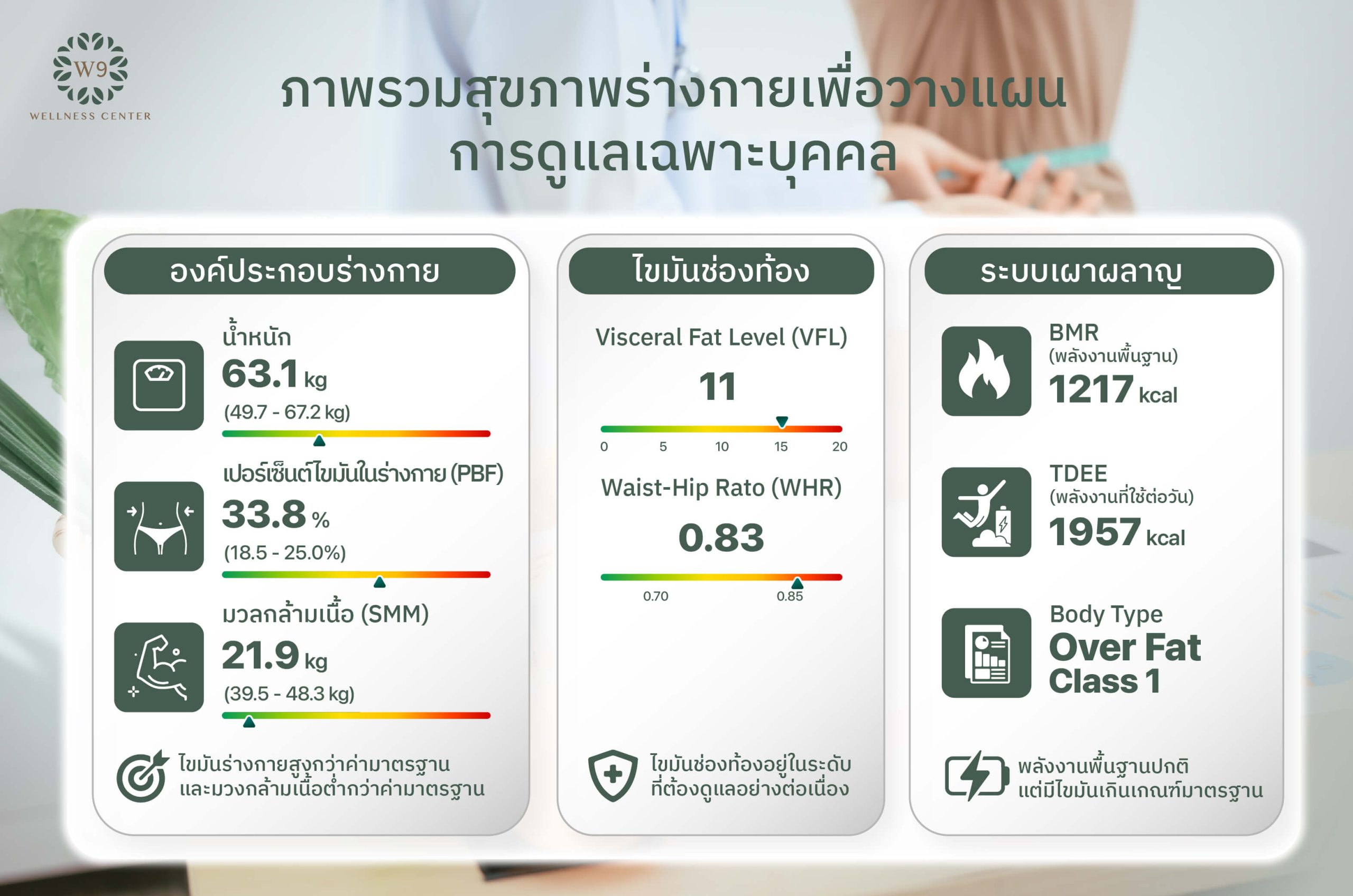
When you lose weight, it doesn't necessarily mean your body is losing only fat. If weight loss is due to excessive muscle mass loss, it may have other effects.
Therefore, the treatment approach focuses on reducing fat while maintaining or supporting muscle mass through nutrition, exercise, and ongoing body composition monitoring.
As we age, our bodies can undergo several changes simultaneously, such as:
Even when consuming similar amounts of food, these factors may make weight management more difficult for some people.
Not everyone needs to use it.GLP-1 group drugs Current medical guidelines recommend considering the use of medication in individuals with appropriate indications, assessed in conjunction with body mass index, comorbidities, and health history.
For those being considered for medication, these drugs play a role in helping control hunger and supporting weight loss in conjunction with behavioral modifications; they are not intended to replace proper nutrition or exercise.
If you have several of the following symptoms:
✓ I'm eating about the same amount of food, but I gain weight more easily than before.
✓ I've lost weight multiple times, but then gained it back.
✓ Feeling easily tired or recovering slowly after exercise.
✓ Often feel hungry during the day, even after just eating.
✓ I feel like my body isn't responding as it used to years ago.
✓ Weight gain occurs after approximately age 35.
It might be a good time to assess overall health rather than focusing solely on calorie reduction, as factors related to weight management vary from person to person.
Read more in this article. Exercising but not losing weight?
This client's experience reflects a common misconception about weight loss that may cause many to miss out on opportunities for proper health care.
Sustainable weight loss doesn't start with drastic lifestyle changes. Or blaming oneself for "lack of discipline." But it starts with understanding what signals the body is sending. And choose a care approach that suits you best.
For this woman, the turning point wasn't giving up all her favorite foods, but rather receiving a systematic health assessment and gradually adjusting her lifestyle to lose weight while maintaining muscle mass and continuing to live a happy life.
While the outcomes of care vary from person to person, beginning to understand your own body can be a crucial first step towards long-term health care.
"Ultimately, taking care of your health isn't about giving up on enjoying life, but about regaining a deeper understanding of your body so you can live the life you love in a balanced way once again."

Q: If I can't lose weight, does that mean my hormones are imbalanced?
A: Not always. Weight gain can be due to a combination of factors, such as lifestyle habits, sleep quality, stress, body composition, or underlying medical conditions. A medical evaluation will help identify possible causes for each individual.
Q: If my annual health checkup results are normal, are additional tests still necessary?
A: In some cases, baseline test results may be within the normal range, but symptoms affecting quality of life persist, such as easy weight gain, fatigue, or difficulty losing weight as expected. Based on symptoms and medical history, further testing may be considered, but it's not necessary for everyone.
Q: Should we focus solely on the number on the scale when it comes to effective weight loss?
A: Weight alone shouldn't be the only factor. Tracking body composition, such as body fat percentage, muscle mass, and visceral fat, provides a better understanding of the quality of weight loss.
Q: Do I have to fast or give up all my favorite foods?
A: For many people, behavioral changes that are sustainable in the long term are more likely to succeed than strict short-term dietary restrictions. The appropriate approach will vary from person to person and should be designed in collaboration with a healthcare team.
Q: Do all people who want to lose weight need to have their hormone levels checked?
A: Hormone testing is not necessary and is not a basic test for everyone trying to lose weight. Your doctor will consider your symptoms, medical history, and initial test results. If there are indications such as unexplained weight gain, irregular menstruation, fatigue, or suspected endocrine disorders, further testing may be considered to provide appropriate and personalized care.
Q: Is it true that losing weight quickly is better?
A: Not always. Rapid weight loss can lead to loss of muscle mass, body water, or affect long-term weight maintenance. Medically, the goal isn't to lose weight as quickly as possible, but to reduce fat mass while preserving muscle mass and building sustainable, healthy habits that support more sustainable results.
This article is based on real client experiences, with some details adjusted to protect privacy. The results presented are individual experiences and may vary from person to person.
The information in this article is provided for health and preventive medicine education purposes only and cannot replace a diagnosis, treatment, or personalized advice from a physician. If you have any health concerns, consult a doctor before deciding to undergo any health check-ups or healthcare treatments.
W9 Wellness Center has two branches.
📍Rama 9 Branch (Ital-Thai House Building)
Call 062-424-2298
📍Chaengwattana Branch (Charn Avenue Project)
Call 062-424-9429
Line @w9bkkwellness
Written and compiled by

Dr. Araya Damnernsawad (Dr. Am)
Anti-aging and preventative medicine physician
W9 Wellness Center