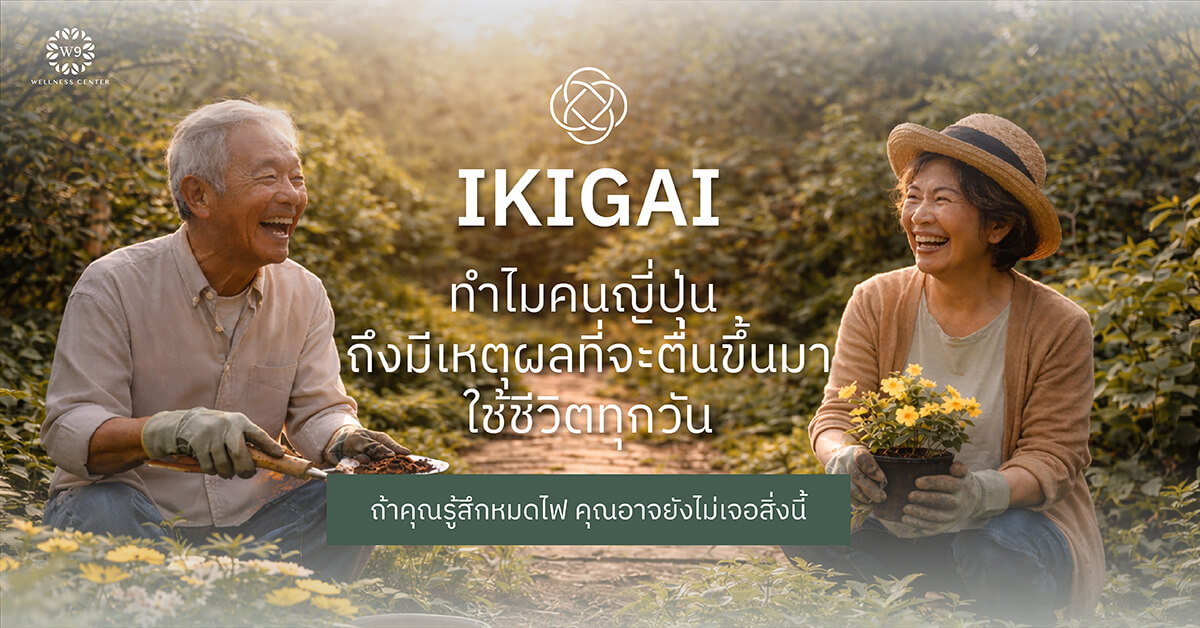
When wellness goes beyond just physical health. As an employee or manager, you may have asked yourself this question some morning. "What is the purpose of us waking up and going to work today?" Some days my body is ready, but my mind is heavy. Some days I have a lot of work to do, but the feeling is... Life has meaning. Fading away, this feeling doesn't mean you're weak, but it might be a sign that you're searching. "The reason for living" In Japanese, this concept is called... Ikigai So what is Ikigai? This word doesn't just refer to material achievement, but also to... The little things that make us want to wake up and live each day.
Over the years, this concept has gained more attention in the field. longevity science and preventive medicine Because several research studies have found that...
Having purpose in life Or a clear meaning in life may be related to...
Simply put, having a reason for living may be part of achieving good health in the long run.
Ikigai (生き甲斐) mean "The reason for living" Or what makes people want to wake up and live each day?
This concept is often explained through the convergence of four key elements.

Things that bring happiness, passion, and inspiration.
The skills, abilities, or expertise that we possess.
The value we can offer to others or to society.
Jobs or activities that can generate income.
When these four elements are interconnected, life often evokes certain feelings.
For people working in today's fast-paced world, discovering Ikigai is not just a philosophical concept, but... Lifestyle guidelines that help conserve energy and maintain life balance in the long term.
One of the areas with the highest number of centenarians in the world is... Okinawa, Japan Which is one of the areas known as... Blue Zone What makes this area interesting is that the people here not only “live long lives,” but also lead active and happy lives. One of their key concepts is… Ikigai Okinawans rarely "retire from life" even as they age. They continue to engage in meaningful activities, such as:
Along with a health-promoting lifestyle, such as:
These factors may help to reduce...

These are all important components of... Long-lasting, high-quality health.
The concept of preventive healthcare and in-depth health checkups is gaining more attention in the field of longevity medicine, especially in... A comprehensive health check-up to assess the body's balance. This helps in better understanding health risks and planning for long-term healthcare.
Okinawa remains one of the areas studied for its longevity and healthy lifestyles. In recent years, natural areas such as… Yambaru Forest In Okinawa, it has been registered as... UNESCO World Natural Heritage
This subtropical rainforest reflects the richness of its ecosystem and is an area where people engage in activities that connect with nature, such as:
In addition, Okinawa is beginning to become a destination for... wellness tourism and digital nomads Seeking to integrate work with a balanced lifestyle, the Ikigai concept is not just a traditional philosophy, but also reflects... The current trend of wellness lifestyle.
Although Ikigai may seem like a philosophical concept about life, in recent years researchers have begun to study the relationship between... Purpose in life and health. Several studies have found that people who feel their lives have meaning tend to have...

In the long term, these may help reduce the risk of chronic diseases such as:
From another perspective, having meaning in life may help. The nervous system, hormones, and healthy behaviors work in greater balance.
Over the years, researchers have studied the relationship between Ikigai and health in the Japanese population. A large study in Japan found that those who reported having... Ikigai, or purpose in life. They have a lower risk of dying from heart disease and other causes compared to those who do not. Recent research has also found a correlation between Ikigai and brain and mental health.
For example
These results reflect that having meaning in life can have an impact on both...

The Ikigai concept is often reflected in the principles of simple living that create balance between body, mind, and lifestyle. These principles are found in the Okinawan way of life, one of the world's Blue Zones.
There are little things that make us want to get out of bed every morning, such as a job we love, our family, or the opportunity to care for others.
Having purpose in life It helps boost motivation and vitality, which research suggests may be linked to mental health and longevity.
You don't need to exercise intensely; just moving your body regularly, such as...
This kind of movement helps to support...
The core principle of Okinawa is: “Hara Hachi Bu” It means stopping eating when you are approximately full. 80
This concept helps reduce the burden on the digestive system and supports long-term metabolic health.
Slow down, listen to the signals from your body and mind.
Living mindfully helps reduce stress and balance the autonomic nervous system.
Focus on freshly prepared, minimally processed, and diverse foods. This type of food helps support...
Eating foods close to nature also helps support...Balance of microorganisms in the intestines This plays a crucial role in both the immune system and mental health. Furthermore, dietary patterns may also affect hormonal balance and metabolism, which you can read more about. Foods that help balance hormones. This can be found in this article.
Connecting with friends, family, and the community helps reduce stress and promotes mental health.
In Okinawan culture, there is a group called... Moai A group of friends who support each other throughout life.

7. Look at the world positively
A positive attitude helps balance hormones and the nervous system; a positive outlook also enhances... psychological resilience During times of challenge.
8. Connected to nature.
Sunlight, fresh air, and trees help to rejuvenate both the body and the mind.
Spending time in nature also helps support... circadian rhythm This plays a crucial role in sleep and hormone balance.
9. Appreciate and be grateful for life.
Training gratitude It helps reduce internal stress and increase life satisfaction.
Keeping a daily journal of things you are grateful for is one simple way to create emotional balance.
10 Follow your heart.
Do things that align with your inner values; even if it's simple, it's meaningful.
When life's activities align with our values and identity, life often feels right. Balance and vitality
While the meaning of life is important, sometimes feelings are.
This may be related to health factors, such as:
Feelings of fatigue, exhaustion, or burnout may be related to health factors such as chronic stress, hormonal imbalances, or altered metabolism. In some cases, a more in-depth health assessment, such as... Hormone balance testorMetabolic assessment This may help us better understand the signals from our bodies and support long-term health care.
If you feel tired even after getting enough sleep, there may be underlying health factors, which you can read more about in our article. Causes of fatigue even with sufficient sleep.
Take a few minutes to ask yourself:
These questions could be a small starting point in discovering your own Ikigai.

In preventive medicine, health doesn't just mean the absence of disease, but also includes... Balance of body, mind, and lifestyle. Concepts like Ikigai therefore reflect one dimension of health called... Psychological Well-being This is related to several aspects of the biological system, such as:
In some cases, your doctor may consider a more comprehensive health checkup, such as:
To help you better understand the root causes of fatigue or exhaustion.
To gain a deeper understanding of the concept of preventive healthcare, you can... You can read more articles about in-depth health check-ups and wellness check-ups here.
Ultimately, what is Ikigai? Ikigai isn't something to rush into or an immediate answer, but rather a process of gradually listening to yourself and adjusting your life's rhythm to align with what's meaningful. Because sometimes, the most important aspect of taking care of your health isn't just about exercising or eating well, but about discovering... "What do we wake up each day to live for?" And when we have that reason, living a long life may not just be about getting older, but about... They have the energy to live life to the fullest every day.
What is Ikigai in simple terms?
Ikigai is a Japanese concept meaning "reason for living," or what makes us feel that life has meaning each day. It could be a job we love, taking care of loved ones, or small activities that make us feel energized and want to continue living.
How does Ikigai differ from life goals?
Life goals are often things we want to "achieve," such as success or income. But Ikigai is what gives life meaning every day. It doesn't have to be grand; it could be small activities that make us feel valuable.
Is Ikigai truly related to health?
Some research has found that people who feel that life has meaning or purpose tend to have better mental health, lower stress levels, and healthier behaviors, which may be related to better long-term health.
Does Ikigai have to be limited to work or a profession?
It doesn't have to be specific. Ikigai can be small activities like cooking, taking care of family, gardening, or helping others. The important thing is that the activity makes you feel that life has meaning.
If you haven't found your Ikigai yet, where should you start?
Start by observing the little things in life, such as activities that energize you or make you lose track of time. Asking yourself, "What makes me feel meaningful?" may help you gradually discover your own Ikigai.
How is Ikigai related to the Blue Zone?
The concept of Ikigai is found in the lifestyle of the people of Okinawa, one of the Blue Zones with a high life expectancy. Having a continuous role or meaning in life may help people remain active and energetic.
Is a feeling of exhaustion in life related to health?
In some cases, feelings of fatigue or exhaustion may be related to health factors such as insufficient sleep, accumulated stress, hormonal imbalances, or nutritional deficiencies. A proper health assessment can help to better understand the underlying causes.
Can Ikigai change throughout life?
Having an Ikigai doesn't necessarily have to remain constant throughout life. When the context of life changes, such as work, family, or health, what makes us feel that life has meaning may change as well.
Rama IX Hospital (3rd floor, Building A)
Written and compiled by

Dr. Chalermpon Innachit (Dr. Nong)
Anti-aging and preventative medicine physician
W9 Wellness Center
References
Tanno, K., et al. (2009). Associations of ikigai… Psychosomatic Medicine.
PubMed: https://pubmed.ncbi.nlm.nih.gov/19539820/ | Semantic Scholar
Sone, T., et al. (2008). Sense of life worth living (Ikigai) and mortality… Psychosomatic Medicine (Ohsaki Study).
PubMed: https://pubmed.ncbi.nlm.nih.gov/18596247/ | PDF Full-text | Semantic Scholar
Boyle, P.A., et al. (2010/2012). Effect of purpose in life on risk of Alzheimer disease… Archives of General Psychiatry / JAMA Psychiatry.
JAMA Full Article: https://jamanetwork.com/journals/jamapsychiatry/fullarticle/1151486 | PubMed: https://pubmed.ncbi.nlm.nih.gov/22566582/
Sutin, AR, et al. (2018/2021). Sense of Purpose in Life Is Associated with Lower Risk of Incident Dementia… JAMA Network Open / JAD.
Journals SAGE (2021 update): https://journals.sagepub.com/doi/abs/10.3233/JAD-210364 | PMC Related: https://pmc.ncbi.nlm.nih.gov/articles/PMC10456211/
This information is provided for general health education and cannot replace a medical diagnosis or advice. If you experience any unusual symptoms, consult a doctor before making any health-related decisions.