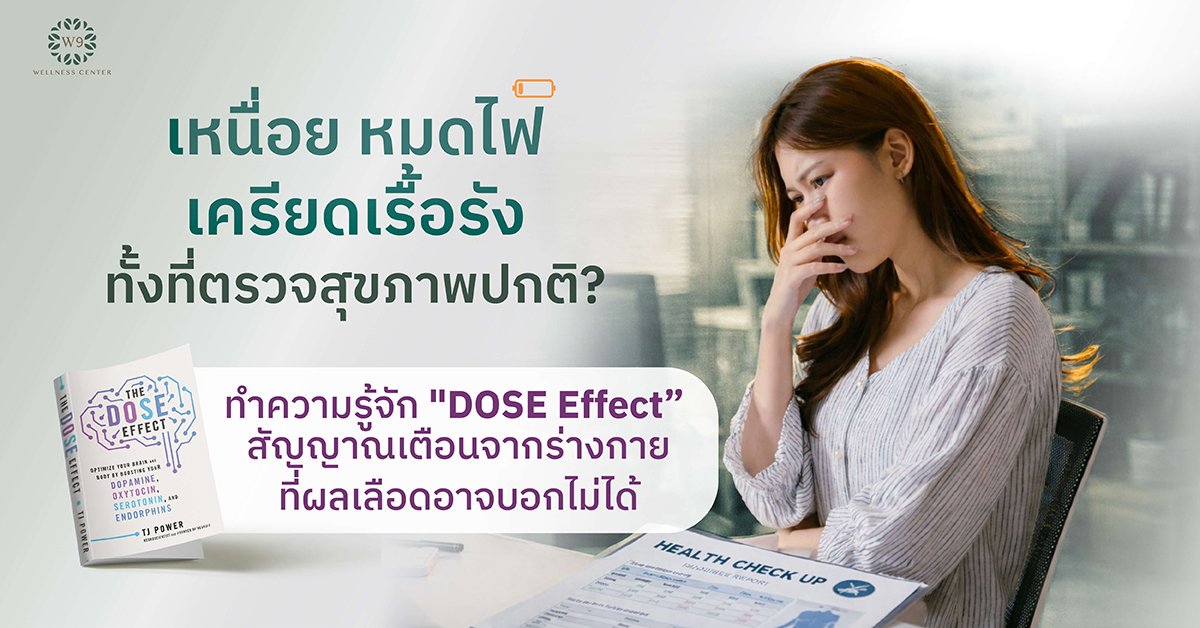
Many people wake up in the morning feeling tired, burned out, and chronically stressed even before starting work. The first cup of coffee doesn't provide the usual energy boost; their brains feel "not online" even after getting out of bed. They feel exhausted, easily distracted, bored, and restless after only a short time at work. By evening, they're too tired to exercise, yet their brains refuse to rest when it's time to sleep.
Some people try to cope by getting more rest, exercising harder, or telling themselves to think positively, but the feelings of fatigue, stress, or burnout still return. Then, a health checkup reveals "normal" blood test results, and the question that arises in their minds is… Or are we too weak?
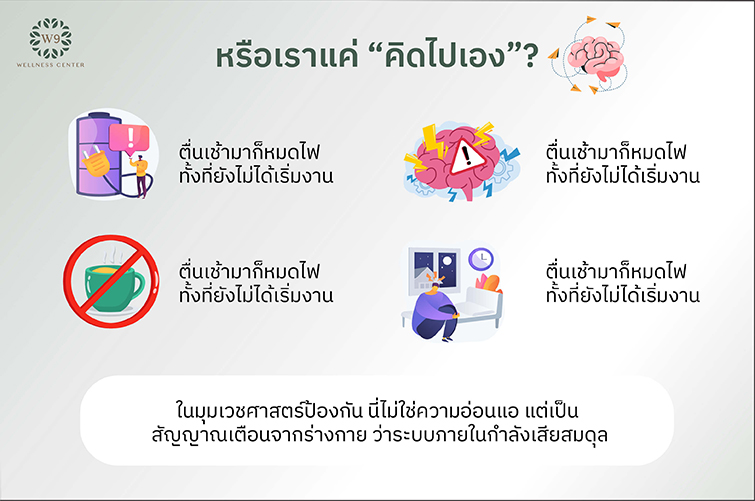
From a preventive medicine perspective, that might not be the case. These symptoms might be... Warning signs from the body This indicates that the internal balance system is being overworked, and one framework that gently and systematically explains this is the concept known as... DOSE Effect
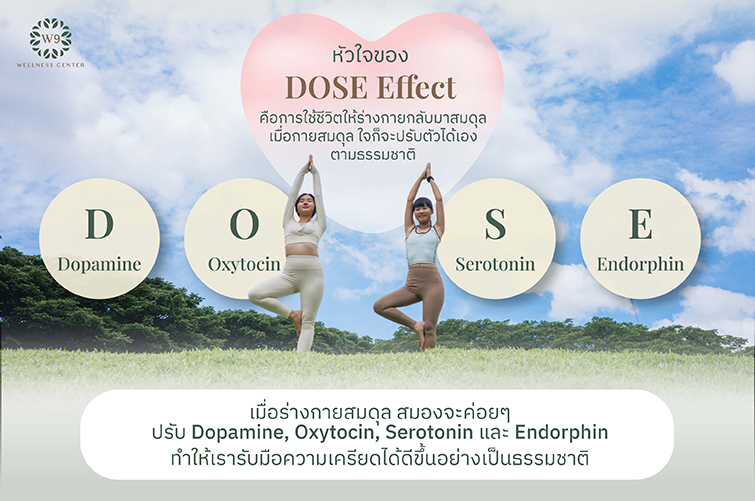
DOSE is an acronym for four brain chemicals:
These substances do not function in isolation but reflect the interplay of multiple bodily systems, such as sleep, hormones, stress, gut health, inflammation levels, and cellular energy production.
For example When sleep quality is poor, stress hormones tend to rise, causing imbalances in dopamine and serotonin, resulting in fatigue, restlessness, and burnout in daily life.
The DOSE Effect is therefore not a diagnostic framework, but rather a perspective that helps us better understand and interpret signals from the body.
Dopamine plays a crucial role in motivation, concentration, and initiating action. In today's world, excessive social media use, alcohol consumption, and sweets can all contribute to this. dopamine hit In the short term, excessive stimulation can disrupt the pleasure-pain balance system, leading to feelings of fatigue, emptiness, and burnout. Dr. Anna Lembke explains that the pleasure and pain centers function like a seesaw; if pleasure is stimulated too quickly, the brain reacts with discomfort and a feeling of despair. Conversely, pleasure that follows effort is deeper and more lasting.
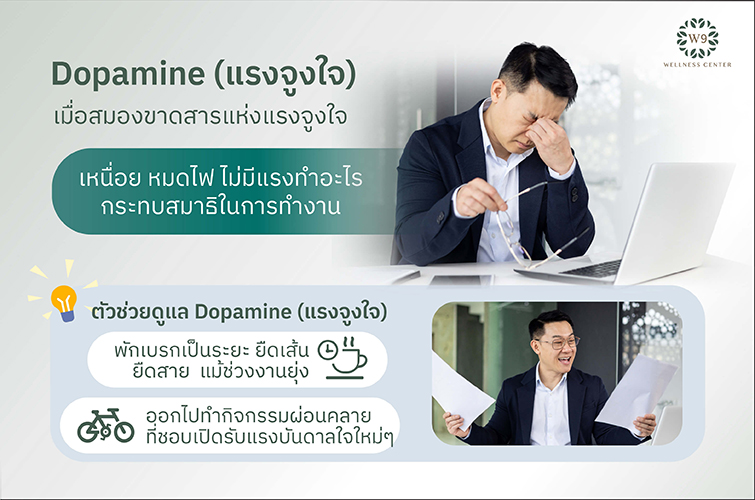
Signs that may indicate an imbalance in dopamine.
In daily life, if you experience these symptoms continuously, it may reflect that... The brain's motivational and concentration systems are working too hard.
These symptoms It doesn't mean you're weak. But it's a sign that your brain may need rest and rebalancing.
Factors that often disrupt dopamine balance in daily life.
In today's world, our brains are easily stimulated by "quick fixes" of pleasure. These factors can cause dopamine fluctuations without us even realizing it.
These factors It's not wrong. However, if this happens repeatedly, it can disrupt the brain's happiness-pain balance and lead to long-term fatigue and burnout.
Guidelines for sustainable dopamine management.
An In-Depth Look at HormonesIn some cases, burnout may be related to... Stress hormone (Cortisol) Irregular ejaculation. Assess hormone balance and the body's recovery rhythm. To clarify whether fatigue is due to "insufficient effort" or from the body working too hard for a prolonged period.
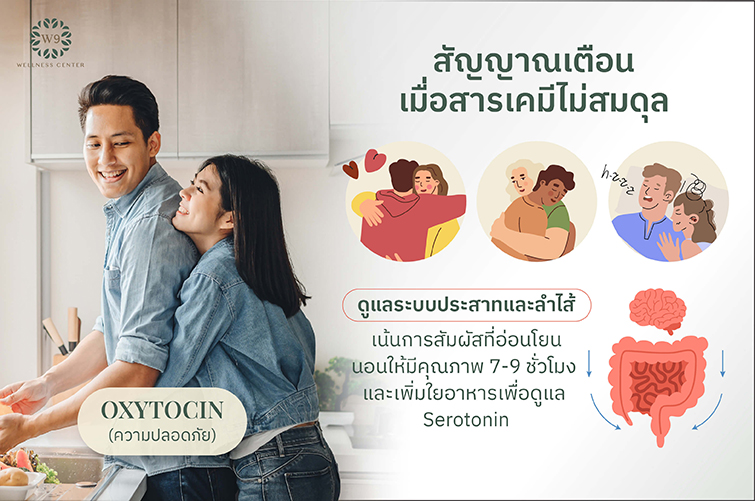
Oxytocin is a vital chemical for human survival; it's not just the "love hormone," but a substance that evokes feelings in the nervous system. Safe, trustworthy, and connected with others. From the moment we are born, oxytocin is released in both the mother's and baby's brains, creating a bond that fosters protectiveness in the mother and makes the baby feel safe enough to live and grow.
In adulthood, oxytocin continues to play a key role in self-confidence, feelings of belonging, and our ability to cope with daily stress.
Oxytocin levels increase through face-to-face interactions such as touch, conversation, and giving and receiving affection, resulting in simultaneous increases in oxytocin levels in both the giver and the receiver.
Comparing oneself to others, harsh self-criticism, or internal voices of blame are direct enemies of oxytocin, while kindness, gratitude, and self-acceptance help the nervous system feel more secure.
In today's digital world, where we work alone, live behind screens, and connect more through technology than in person, many people experience a silent decrease in oxytocin levels. This results in feelings of loneliness, isolation, and insecurity, even though they may appear to be "living normally" on the surface.
Numerous studies have found that chronic isolation has detrimental effects on health, comparable to smoking several cigarettes a day, and is associated with a shorter lifespan. Even personality traits can influence oxytocin levels; some people gain it from group interactions, while others, particularly introverts, benefit from in-depth, one-on-one conversations. Regardless of the form, all humans crave love, connection, and the feeling of belonging to someone.
Signs that may indicate low oxytocin levels.
These symptoms It doesn't mean you're weak. But it may also reflect a lack of a sense of security and connection in the nervous system.
These factors can affect many people, especially during periods of heavy workload, stress, or spending most of their time in front of a screen.
Guidelines for sustainable Oxytocin management.
An in-depth look at the nervous system.
Low oxytocin levels in some people reflect that the nervous system is still in a "warning" mode due to accumulated stress. Therefore, care isn't just about relationships, but also about helping the body regain a sense of security from within.
Serotonin is an important chemical that helps us stay calm, composed, and energetic in our daily lives. Many people believe that emotions, stress, or anxiety are primarily caused by "thoughts," but in reality... More than 90% of serotonin is not produced in the brain. But it's built in the intestines and communicates with the brain through an important nerve called... vagus nerve
These nerves serve to report the status of the entire body, including digestion, breathing, heart rate, energy levels, and immune function. When the body is fatigued, the digestive system is disrupted, sleep is poor, there is a lack of sunlight, or it is isolated from nature, the brain sends signals that... "The body is not safe." This results in a decrease in serotonin levels and causes symptoms such as anxiety, irritability, mood swings, or fatigue without a clear cause.
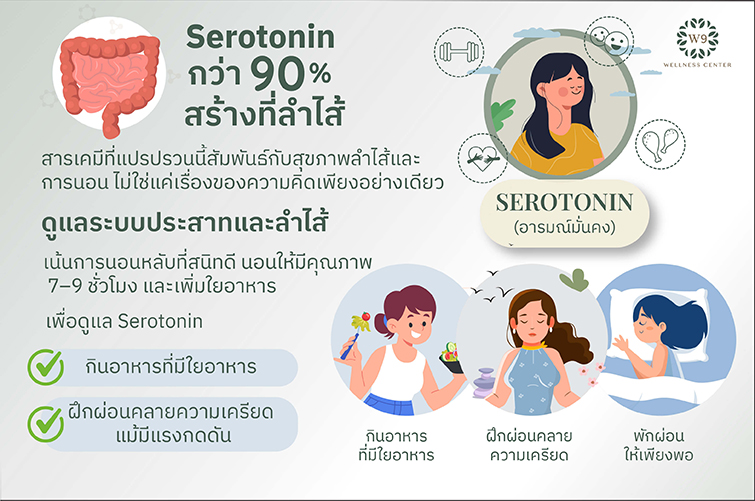
These emotions are not weakness, but rather... "Messages from the Body" The statement that we should take better care of ourselves means that when the body is properly cared for, serotonin levels will gradually recover. And when the body is calm and strong, the mind will gradually become calm and stable as well.
Signs that may indicate a decrease in serotonin levels.
These symptoms can occur even if basic health check results are within the normal range.
Factors that often disrupt serotonin balance.
These factors often occur together in people who experience chronic stress and unconsciously affect their emotional balance.
Guidelines for managing serotonin.
Gut–Brain Axis In-Depth Perspective
In some individuals, mood swings may be related to an imbalance of gut microbiota or underlying inflammation, since most serotonin is produced in the gut. Assessing gut health and the gut-brain axis. To help make mental health care "easier" without forcing it. E - Endorphin, a natural stress-relieving substance.
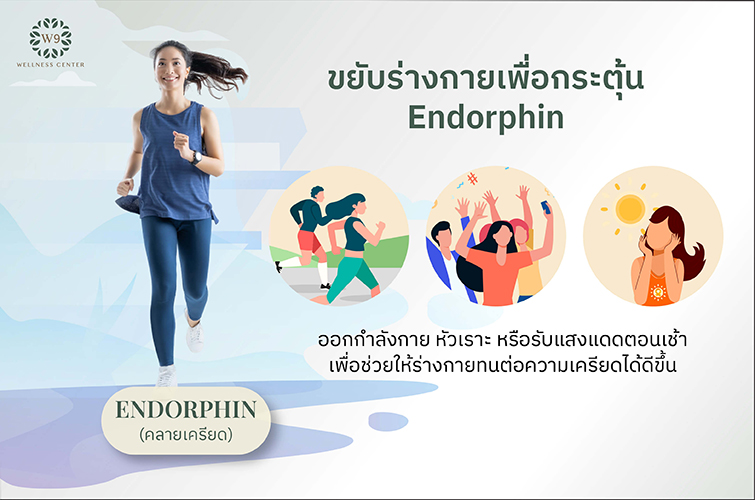
Endorphins are natural substances in the brain and body that play an important role in helping us... Increased tolerance to stress and pain. The primary goal of endorphins is to help us survive in situations where the body needs to exert effort, face stress, or overcome fatigue, such as sprinting, strenuous exercise, or engaging in activities that require sustained physical exertion.
When the body exerts real effort, the brain releases endorphins to suppress pain, reduce tension, and help us stay focused on what we're doing. It's like... "Natural pain relievers and stress reducers." It's a part of the body; this is the reason for the phenomenon. Runner's High Many people feel relieved, relaxed, and in a good mood after strenuous exercise.
In daily life, if we sit for long periods, move little, work under continuous stress, and don't have opportunities for actual physical exertion, the endorphin system will not be sufficiently stimulated. As a result, we may begin to feel easily stressed, irritable, angry, or experience pent-up emotions, both physical and emotional, even without any violent events occurring. These symptoms... It's not just an emotional problem. But it's a sign that the body hasn't been given the chance to release its natural stress.
Signs that may indicate a decrease in endorphins.
Factors that often disrupt endorphin balance.
These factors are common among modern workers, especially those who use a lot of mental energy but little physical energy.
Guidelines for sustainable endorphin management.
The important thing is not the weight, but... Consistency and allowing the body to move naturally.
Endorphins are a stress-relieving system that relies more on the "body" than on thoughts. For some people, trying to think positively or relax rationally may not be effective if the body hasn't released its accumulated energy. Returning to appropriate physical activity therefore helps both the body and nervous system gradually return to natural balance.
Symptoms of dose imbalance often do not present as a clear disease, but they continuously affect quality of life. Within the framework of preventive medicine, physicians may consider... A holistic assessment of health at the cellular and systemic levels. To connect real-life symptoms with deeper health information beyond basic tests, such as hormone balance, gut health, vitamin levels, and cellular regeneration, not everyone needs to get every test. However, a clearer understanding of your body can help reduce trial and error and allow for more targeted self-care.
Return to living in harmony with your body's natural rhythm. DOSE isn't just about brain chemicals. But it's about returning to focusing on movement, connection, sleep, gut health, and listening to your inner feelings. When the body begins to balance, the brain will gradually adjust dopamine, oxytocin, serotonin, and endorphin, and we will be able to cope with stress better, more naturally.
This article is for medical information purposes only and cannot replace diagnosis or treatment. If symptoms are severe or chronic, consult a specialist.
Frequently Asked Questions (FAQ)
Q: Or am I just weak, an overthinker, and not as good at coping with stress as other people?
A: Not necessarily. Feeling tired, burned out, or restless doesn't always reflect weakness. It could be a sign that your body's internal recovery system is working too hard due to accumulated stress.
Q: If a health checkup shows normal results, does that mean everything else should be normal too?
A: Not always. Basic tests often look for apparent diseases, but may not reflect hormonal balance, the nervous system, gut health, or the body's recovery in daily life.
Q: Are these symptoms a mental or physical issue?
A: In many cases, they are both interconnected. The body and brain work as a single system. When the body is fatigued, the brain and emotions are often affected as well.
Q: I've rested, I've slept, but I'm still not feeling better. Does that mean I'm not resting properly?
A: Not necessarily. Sometimes rest alone isn't enough. If internal systems like hormones, gut, or the nervous system are out of balance, the body may recover more slowly than it should.
Q: If I have to start managing the DOSE Effect, does that mean I'm about to have a health problem?
A: Not necessarily. The DOSE Effect is not a diagnosis, but rather a framework to help understand the body's early signals in order to take preventive care before problems become more apparent.
Q: Do everyone need to be thoroughly tested, or am I overthinking this?
A: Not everyone needs it. A thorough examination should be considered based on symptoms, medical history, and the doctor's discretion. Some people improve with lifestyle changes, while others may require further evaluation to understand the reasons for their difficulty recovering.
Q: If I have several symptoms at once, does that mean my body is in very poor condition?
A: Not necessarily. Multiple symptoms occurring simultaneously often reflect an overall accumulation of stress in the body, rather than a specific, serious illness.
Q: Where should I start addressing things if everything feels out of control?
A: We recommend starting with the most prominent symptoms in your daily life, such as burnout, anxiety, or fatigue, and then gradually making systematic adjustments. It's not necessary to address everything at once.
Q: What will happen if I leave these symptoms untreated?
A: These symptoms may not be a disease at the moment, but if left untreated, they can affect your quality of life, work, and long-term health. Listening to your body's signals early on is therefore part of preventative care.
Rama IX Hospital (3rd floor, Building A)
Written and compiled by

Dr. Chalermpon Innachit (Dr. Nong)
Anti-aging and preventative medicine physician
W9 Wellness Center