Some people rest…but never feel truly recovered. Many working adults experience this recurring scene: Get enough sleep, rest, and have a day off. But they've returned to their daily lives. My body is tired, my mind isn't refreshed, I have difficulty concentrating, it's like my battery isn't fully charged The "rest-and-recovery" condition can be temporary due to overwork or short periods of insufficient rest, but if it persists for too long... 2–3 weeks Or it could affect their work and quality of life. This often reflects an imbalance in the body's recovery system. It's not just about "age" or "not being diligent enough."
From a preventive medicine perspective, "rest doesn't always lead to recovery" doesn't just refer to fatigue from overwork, but rather a condition where... Repair system + Energy production system + Stress regulation system They're not working to their full potential, even after you've given them "breaks."
Sleep and fatigue specialists explain that chronic fatigue is often related to multiple systems simultaneously, such as sleep quality, hormonal balance, the immune system, and metabolic processes. This is why some people “rest, but never feel truly refreshed.”
Recovery occurs most significantly during the body's "repair" mode, which is often associated with quality sleep and a reduction in nervous system stimulation from stress.
period deep sleep This is a period when the body repairs many systems, such as muscles, the nervous system, and the immune system. If you don't get enough deep sleep, even if you sleep for the "full number of hours," you may not feel refreshed.
Naturally, cortisol levels should decrease at night to allow the body to enter a rest and repair mode. If cortisol remains high (e.g., from chronic stress or an irregular sleep schedule), recovery is often hindered.
These days, many people have wearable devices that measure sleep and heart rate (HRV). While not a medical diagnostic tool, they can help to better "see trends" in recovery.
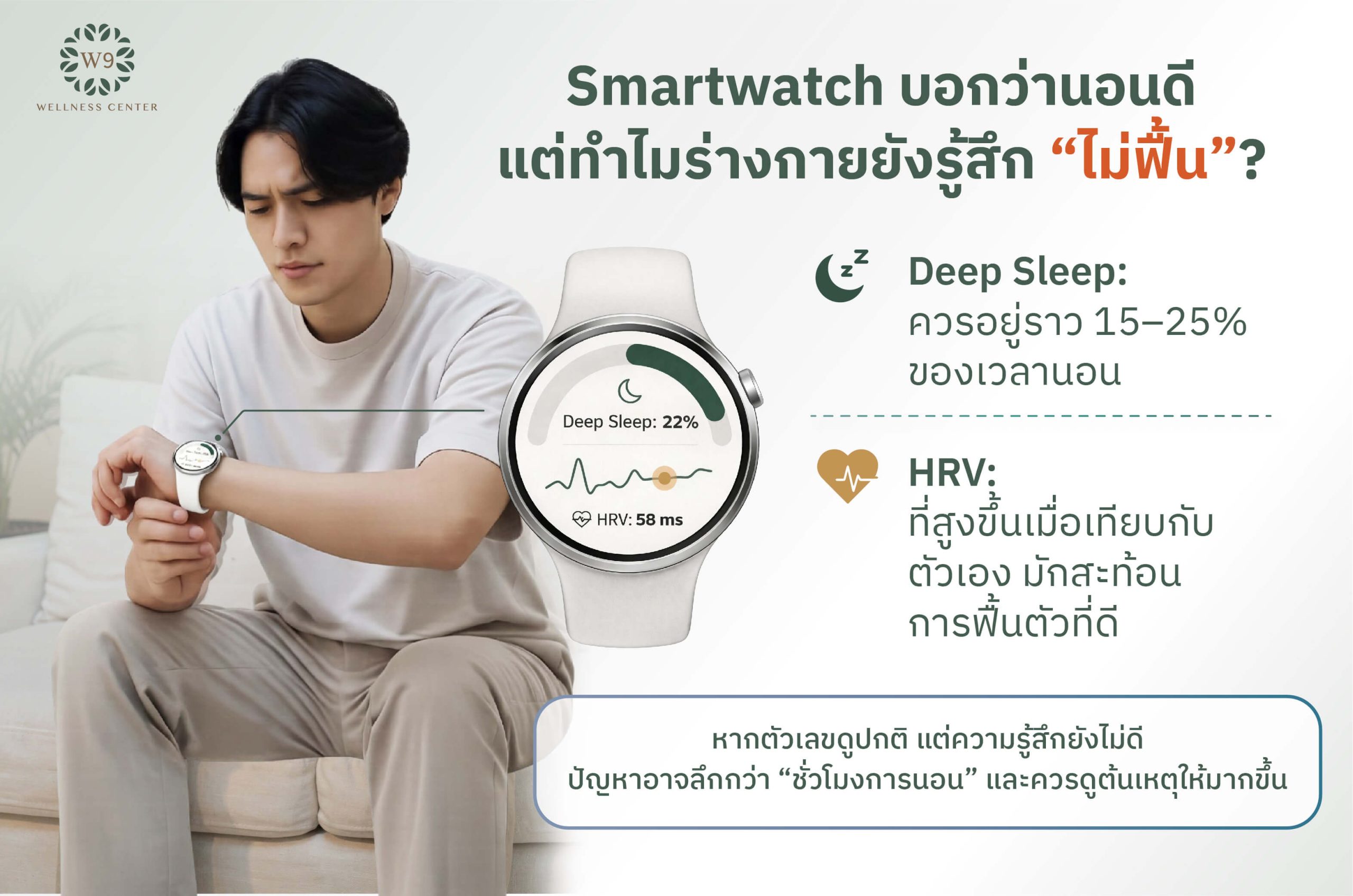
Metrics that employees can actually use to see the results.
Important: If your wearable says "sleep well," but you still... Resting doesn't help recovery. Continuing on, that's a signal that other factors should be evaluated as well; we shouldn't rely solely on the numbers.
Hormones play a role in energy, sleep, and recovery, such as: Cortisol (stress), thyroid (metabolism), sex hormones (body/muscle/emotion balance) When the body is under chronic stress, the nervous system goes into "danger mode," resulting in reduced deep sleep and repair processes.
In many cases, a doctor may consider... hormone panel To get an overview of hormone balance, especially when symptoms recur in the same pattern, such as easy fatigue, feeling unrested after sleep, mood swings, or intermittent energy drops.
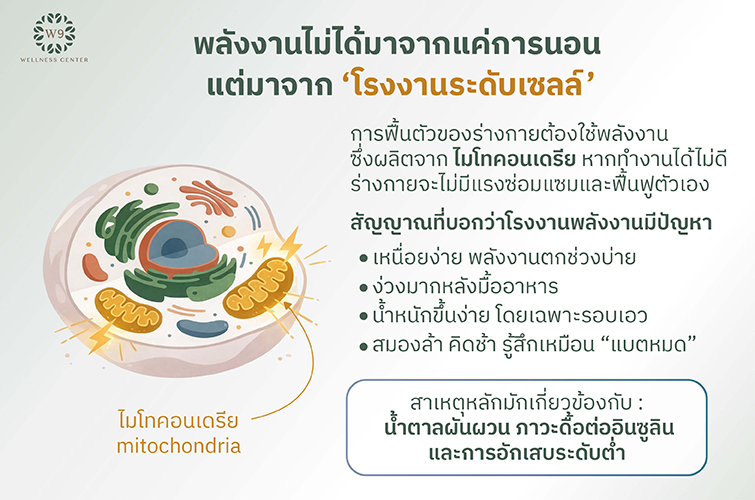
Recovery requires energy from...mitochondria This is like the "energy factory" of cells. If the metabolism is out of balance (e.g., fluctuating blood sugar, insulin resistance, or low-level inflammation), the body will recover more slowly, even with rest.
Common signs in working people.
After recovering from COVID-19, some people may experience symptoms. Chronic fatigue, brain fog, not feeling refreshed after sleep. Continuing on, the World Health Organization (WHO) has information on post-COVID conditions, which include fatigue.
References: WHO – Post COVID-19 condition
Among working individuals, especially those who have previously been infected with COVID-19, many notice that they are recovering "slower than usual," even with sufficient rest. Symptoms such as fatigue, mental exhaustion, or a lack of full energy return are common and reflect that the body's recovery system may not yet have returned to its normal balance.
This condition causes many people to feel "not the same" after COVID and is often overlooked because basic test results appear normal. However, from a preventive medicine perspective, these symptoms are important signals that should be evaluated in depth to understand whether the body is fully recovering.
If left untreated for too long, it may lead to...
The key aspect of preventive medicine is... Don't wait until it becomes a disease. But we started picking up signals when the system began to lose balance.
Note: "Filling in based on feelings" without evaluation is not recommended, as it may not address the root cause.
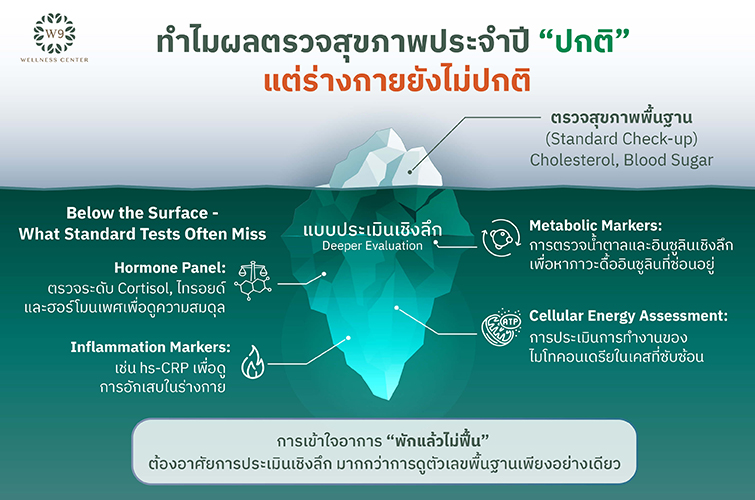
Basic health check results may sometimes be "normal," but that doesn't mean the recovery system is functioning normally. Inability to recover during rest is often related to multiple factors such as hormones, sleep, inflammation, and cellular energy.
Examples of medical examinations. Perhaps consider In some cases.
In Thailand, there are currently several centers of preventive and anti-aging medicine that offer in-depth screening in these dimensions, including: W9 Wellness Center The focus is on identifying the "root cause" and designing personalized care plans based on test results and actual lifestyle.
Q1: How do you differentiate between burnout and chronic fatigue?
A: Burnout is often associated with workload/stress and improves with a change of context/quality rest. However, chronic fatigue often has distinct physical dimensions, such as abnormal recovery, feeling unrested after sleep, decreased activity tolerance, and in some cases, PEM (Presbyocular Emphysema).
Q2: How many days should I take off from work if my symptoms are severe?
A: If symptoms are clearly impacting your work, start by "reducing your workload" for 3-7 days + adjusting your sleep/lighting/caffeine, while documenting your symptoms. If your condition doesn't improve or worsens, you should consult a doctor.
Q3: Is sleeping more than 8–9 hours good or bad?
A: Sometimes it might be compensating for lost sleep debt, but if you have to sleep for extended periods and still don't feel refreshed, it could reflect poor sleep quality or systemic factors. This should be considered in conjunction with symptoms and appropriate tests.
Q4: Are irregular/heavy menstrual bleeding related to fatigue in women?
A: Yes, it can be related, especially if there is iron deficiency/anemia or hormonal imbalance. A holistic assessment is needed.
Q5: What if the numbers look good with wearables but the market hasn't recovered yet?
A: Look beyond the numbers, such as sleep apnea, hormones, anemia, thyroid issues, long-term COVID, or chronic stress, and then choose the right tests.
Q6: How long does long-term COVID cause fatigue?
A: In some cases, it can last for several months, and possibly longer. The WHO states that it may affect daily life and requires symptomatic care/rehabilitation.
Are you "resting to get through the day," or are you genuinely trying to recover?
If you experience recurring symptoms of difficulty recovering despite normal baseline test results, a more in-depth evaluation may help you better understand your body and design a care plan that is truly tailored to you.
note
This article is for informational purposes only and should not replace medical diagnosis or treatment. Examinations and care depend on the physician's judgment and individual suitability.
Praram 9 Hospital (3rd floor, Building A)
Written and compiled by

Anti-aging and preventative medicine physician
W9 Wellness Center
Recommended References